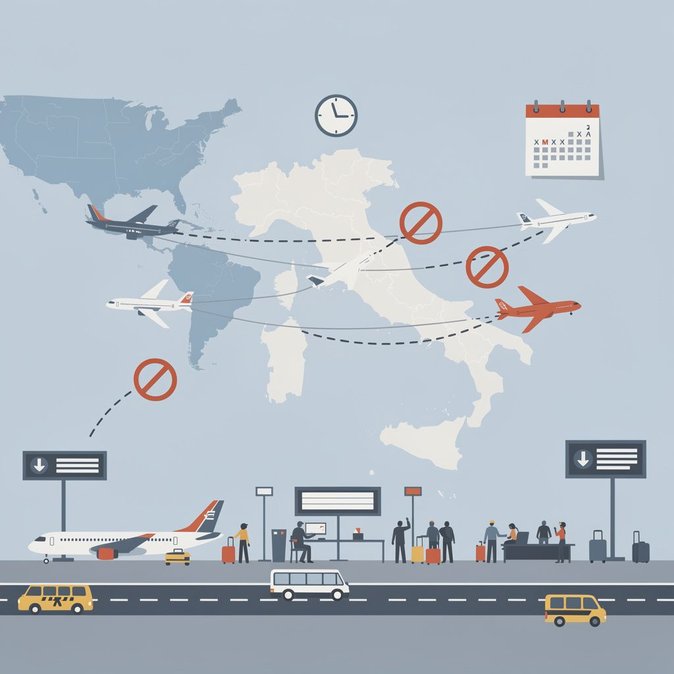
easyJet has pre-emptively canceled more than 56 flights and Ryanair has retimed or pulled additional services ahead of Italy’s 30 October 2026 national transport strike, which includes a four-hour walkout by air-traffic controllers (13:00–17:00 local) and a 24-hour strike by ground handlers and security staff. Although the labor action is European, the impact reaches American travelers and corporations with operations in Italy. U.S.-bound departures from Rome Fiumicino, Milan Malpensa and Venice are among those scrubbed, forcing passengers onto later dates and triggering re-booking of connecting itineraries through London, Frankfurt and Madrid. Airports have warned that even protected service windows (07:00–10:00 and 18:00–21:00) may experience knock-on delays because baggage and security functions will be understaffed all day. Under EC 261 and UK 261, strikes classified as “extraordinary circumstances” generally relieve airlines of cash compensation obligations, but carriers must still provide meals, hotel rooms and alternative transport. Mobility managers should confirm that employees traveling to year-end conferences or project kick-offs have flexible tickets and understand refund versus re-route options. Beyond the immediate disruption, the episode highlights systemic exposure: Italy has logged eight nationwide transport strikes in 2026 alone, often announced with minimal lead time. Firms that rotate expats through Milan’s finance hub or Rome’s diplomatic circuit may wish to negotiate change-fee waivers in corporate travel contracts and keep remote-work contingencies ready. Travel risk providers note that multi-modal strikes (air, rail, metro, taxis) magnify the challenge, potentially stranding travelers even after they land. Advisories recommend booking hotels near the airport or city center and using pre-arranged car services immune to taxi stoppages.
Source: AirHelp