UK unveils ‘Earned Settlement’ framework, doubling qualifying period for permanent residence
Home Office publishes final “Earned Settlement” framework, doubling standard wait for UK permanent residence
Dublin on lockdown as European Political Community summit opens
Latest News

India slashes visa types from 26 to 9 in biggest overhaul in two decades
India has collapsed 26 visa types into nine purpose-based categories and cut the online form by 70 per cent. The reform promises faster, clearer processes for tourists, investors, students and long-term business travellers, but will require companies to update internal documentation and workflows before the December roll-out.

Nationwide outage of Brazil’s Federal Police immigration platform halts CRNM issuance and appointment scheduling
A nationwide IT failure has taken the Federal Police’s immigration systems offline, forcing the cancellation of visa-registration, change-of-status and CRNM appointments across Brazil, including São Paulo. Employers and foreign nationals should expect prolonged delays, document cancelled slots, and adjust onboarding and compliance timelines accordingly.

India Overhauls Visa System: ‘Tourist Visa’ Rebranded, Categories Cut from 13 to 9
India has renamed its Tourist Visa as a broader Visitor Visa and trimmed the overall visa menu from 13 to 9 categories, with 49 sub-classes merged into 23. Short-stay activities such as meetings, medical check-ups and short courses are now covered by a single V-1 visa, while online application fields drop by up to 70 %. The streamlined system is due to go live by year-end, promising faster processing and fewer category errors—good news for multinationals moving staff in and out of India. ([pib.gov.in](https://www.pib.gov.in/PressReleseDetailm.aspx?PRID=2335182&lang=2®=48&utm_source=openai))

ICE Deportation Operations Continue at Full Speed Despite Post-Midterm Political Signals
Despite President Trump’s postelection suggestion of a softer tone, ICE agents carried out multiple arrest operations nationwide on Nov. 10-11. The raids underscore that interior enforcement remains robust even after Democrats won control of Congress, leaving foreign employees and the companies that sponsor them at continued risk of sudden detention or worksite audits.

Canary Islands declare migration emergency after record arrivals
Spain has declared a migration emergency on El Hierro after nearly 6,000 irregular migrants arrived in the Canary Islands within ten days. Extra funds and transfers to larger islands aim to ease pressure, but business groups fear tourism fallout and the issue has entered Spain’s election debate.

Express Entry invitation rounds remain paused eight days after CRS overhaul
IRCC’s Express Entry system has been on hold since 3 November while all profiles are rescored under new rules that award up to 150 points for high-wage Canadian work experience or job offers. As of 12 November there is still no invitation round and no confirmed restart date, disrupting candidates and employers who depend on federal selections.

Ireland hosts 50 leaders in its largest ever diplomatic event
Fifty heads of state and government are in Dublin for today’s EPC summit—the largest diplomatic event ever staged in Ireland. The high-security gathering has led to overflow flights at regional airports, fast-track visas for accredited aides and temporary slow-downs in immigration services, adding complexity for business travellers and relocation planners. ([rte.ie](https://www.rte.ie/news/eu-presidency/2026/1112/1598891-epc-summit/?utm_source=openai))

Nationwide Federal Police system outage stalls immigration procedures across Brazil
A nationwide crash of the Federal Police’s immigration IT system on 11 November 2026 has halted visa registrations, change-of-status filings, CRNM issuance and fine verification. Appointments are being cancelled—particularly in São Paulo—creating fresh backlogs and forcing employers to delay start dates or place staff on visitor status. Companies should capture evidence of cancellations, expect longer processing times once the system is restored, and adjust mobility timelines accordingly.

Federal Council Seeks to Keep Status S Holders’ Freedom to Travel Within Schengen
The Federal Council has sent Parliament a bill that would permanently codify the right of Status S holders (mainly Ukrainians) to leave Switzerland and return without a separate permit, aligning Swiss rules with the EU’s 90-day Schengen visa waiver. The law would not loosen travel for regular asylum seekers or the provisionally admitted, who would face stricter rules under the same package. This gives employers and universities more predictability while keeping limits on visits to Ukraine itself.

Cyprus slashes 2027 migration budget after 90 % drop in irregular arrivals
Cyprus will trim its 2027 migration budget by €14.5 million after irregular arrivals fell from 14,000 in 2022 to about 1,500 so far this year. Completed reception-centre projects and a 90 % EU co-financing rate allow the savings. The ministry will digitalise permit tracking and fill 46 permanent posts to cut processing times, benefiting employers and expatriates.

Deal Reached: No Security-Checkpoint Strikes at German Airports Until 2028
Ver.di and the BDLS have signed a collective agreement that bans strikes by aviation security staff until the end of 2028 while granting staged pay rises. The pact brings four years of labour peace to passenger screening at Germany’s major airports, removing a key disruption risk for airlines and corporate travellers.

Hong Kong to expand “Seamless e-Channel” and launch contact-less vehicle clearance at HZMB port
Hong Kong will widen its passport-free “Seamless e-Channel” to arriving passengers and, in December, start a facial-recognition on-board clearance pilot for private cars at the Hong Kong-Zhuhai-Macao Bridge. The twin moves are designed to cut pedestrian processing times and slash vehicle-clearance from two minutes to around 20 seconds, boosting connectivity with mainland China and the wider Greater Bay Area—good news for corporates shuttling staff and goods across the border.

Unattended bag briefly halts passenger screening at Brussels Airport
Security screening at Brussels Airport was suspended for about 40 minutes on 11 November after staff discovered an unattended bag. Police explosives units cleared the item and checkpoints reopened, but departing passengers faced longer queues for several hours. The incident highlights the importance of buffer time in corporate travel itineraries and of passenger vigilance with baggage.
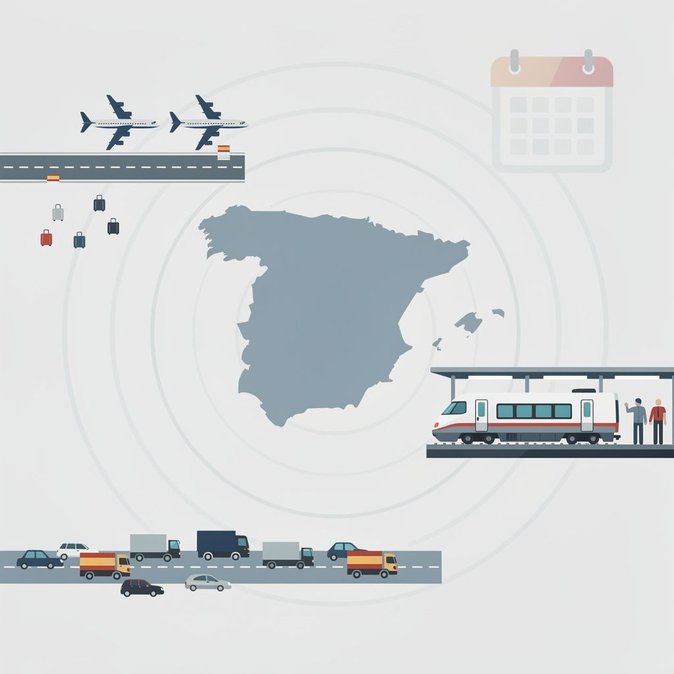
Nationwide General Strike Grounds Flights and Halts Public Transport Across Spain
Spain’s 11 November general strike cancelled roughly 7 % of flights, limited commuter trains and slowed road freight, with residual delays on 12 November. The walk-out highlights Spain’s vulnerability to coordinated industrial action and comes ahead of a 29 November election that could trigger further stoppages. Companies with travellers or expatriates in Spain should review contingency plans and allow extra journey time.
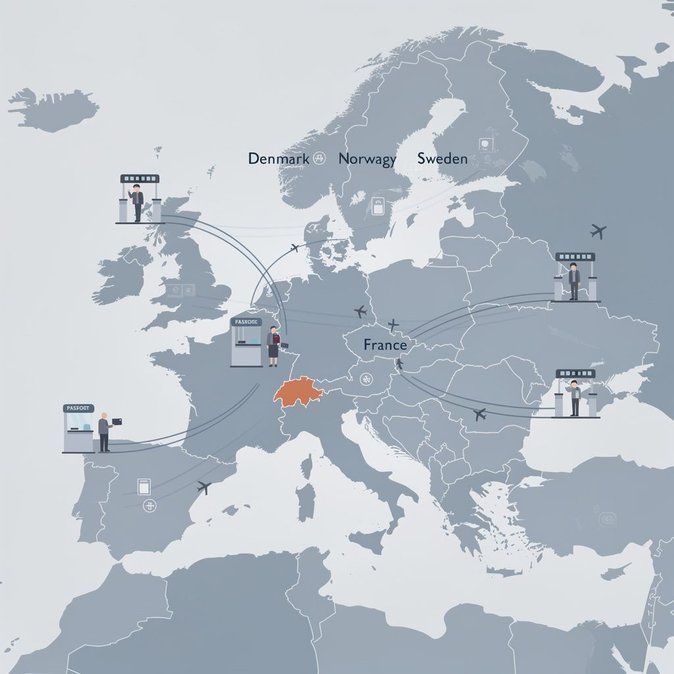
EU updates list of Schengen internal-border controls – France keeps six-month checks in place as Nordic states add fresh restrictions
The European Commission’s 12 November update confirms France will keep passport checks on all internal borders until at least 30 April 2027, while Denmark, Norway and Sweden launch new six-month controls the same day. Business travellers should expect document inspections and build extra time into trips via road, rail and air links connecting France with neighbouring countries.

Inspection finds UK-France ‘one-in, one-out’ small-boats returns pilot workable but poorly defined
ICIBI says the UK-France pilot that returns some Channel migrants to France proved logistically viable but lacked clear metrics, value-for-money analysis and transparent French feedback. With the UK accepting the recommendations, both governments may redesign the scheme—meaning rules on admissibility and enforcement at French ports could change again soon.

Citizenship Bill Tracker Confirms No Immediate Change to Ireland’s Five-Year Rule
StampWise’s 12 November update confirms that Ireland’s plan to raise the naturalisation residency threshold to eight years remains only a proposal; the existing five-year rule still applies. However, the Government intends to enact the Bill before year-end, prompting a significant spike in citizenship applications and forcing employers to accelerate talent-retention and relocation decisions.