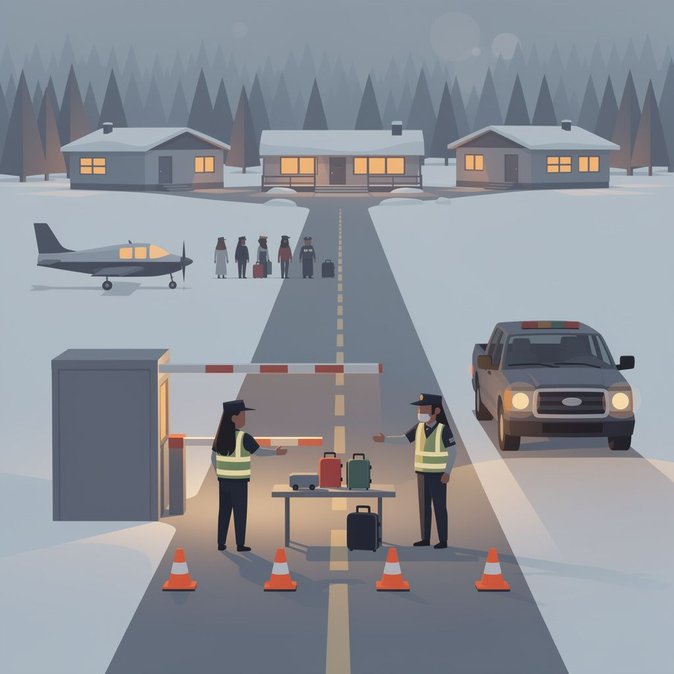
A coalition of five remote First Nations in northern Ontario has begun screening every traveller who enters their communities under a new community-driven border-control pilot program. Led by the Nishnawbe Aski Police Service (NAPS), the pilot introduces permanent checkpoints at small airports, float-plane docks, winter roads and river landings that serve Kasabonika Lake, Kashechewan, Sachigo Lake, Sandy Lake and Eabametoong First Nations. Special constables— all recruited from within the participating communities— are empowered by Band Council Resolutions to inspect baggage, cargo and even personal clothing for illicit drugs, alcohol, weapons and paraphernalia. The initiative is a direct response to a public-health emergency declared by Nishnawbe Aski Nation (NAN) chiefs after a spike in opioid-related deaths and violence across Treaty 9 territory in 2025. Because the communities lie hundreds of kilometres from road networks, traffickers have been flying narcotics in on small aircraft or driving them in during the short winter-road season, often concealing contraband on their bodies. Chiefs say outside dealers from the Greater Toronto Area are deliberately targeting vulnerable residents, fuelling addictions and gang activity. Unlike conventional federal border checkpoints, the pilot is rooted in Indigenous self-determination. Each First Nation has drafted its own search rules, signage and banishment policies, and elected leaders insist the program become permanent once proof-of-concept funding expires next spring. NAN Grand Chief Alvin Fiddler argues that “border control should not be a pilot—it should be the standard,” and is lobbying Ottawa and Queen’s Park for sustained operational dollars. For businesses, contractors and medical workers who fly into the communities, the new checks mean longer lead times, more documentation and potential cargo searches. Employers have been advised to brief staff on permissible items and build extra time into travel itineraries. Conversely, the checkpoints may improve project timelines over the long run by reducing crime, protecting critical infrastructure and improving workforce stability. The pilot also illustrates a wider trend in Canadian mobility policy: the localisation of border enforcement in the face of federal resource constraints. If the model proves effective, other remote Indigenous communities—both in Ontario and elsewhere— could replicate it to curb not only narcotics but also firearms trafficking and wildlife poaching.
Source: Global News Canada