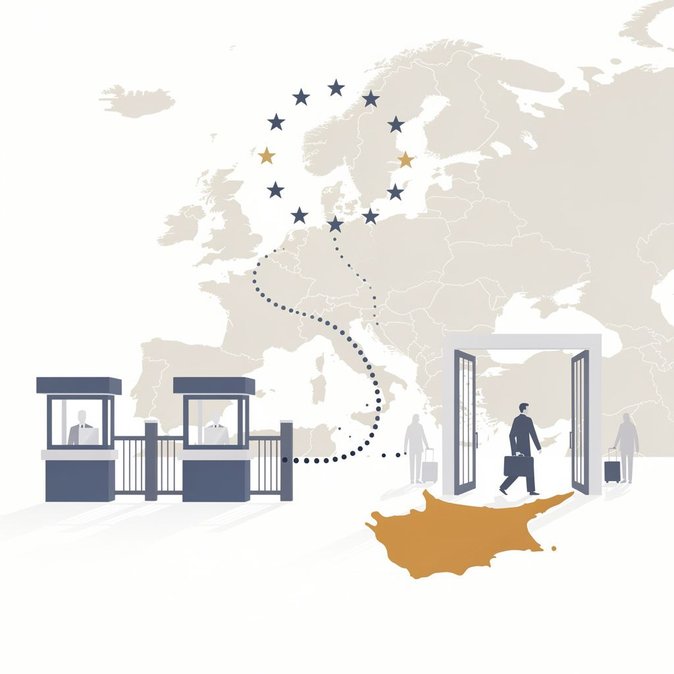
Speaking on the sidelines of the informal European Council summit in Dublin on 13 November 2026, President Nikos Christodoulides publicly declared that Cyprus aims to secure full Schengen membership in 2027. He told Politis that the Republic “completed all technical requirements two years ago” and is now waiting for a political-level decision in Brussels. The remarks come one day before EU interior officials in Brussels discuss a draft Council Implementing Decision to close Cyprus’ Schengen evaluation action plan—a bureaucratic green light regarded as the last milestone before ministers can vote on accession. A working-party agenda circulated to delegations lists the item for discussion on 13 November. If the action plan is closed, the decision will move up to the Justice and Home Affairs Council, currently scheduled for 3 December 2026. For global-mobility managers the timeline matters. Once inside Schengen, Cyprus would abolish systematic border checks for travel to and from 27 other European countries, transforming duty-trip logistics. EU-resident assignees would no longer need separate Cypriot permits for short business visits, and Cyprus-issued residence cards could in time become valid travel documents across the bloc. Conversely, companies that route travel via Larnaca or Paphos airports should prepare for implementation of the EU’s new Entry/Exit System (EES) and ETIAS authorisation, both of which apply to Schengen members. Political hurdles remain. Several member states have previously linked Cyprus’ accession to progress on the island’s reunification talks, and 2027 overlaps with elections in France, Germany and the Netherlands—capitals whose backing will be decisive. Nevertheless, Christodoulides’ statement indicates confidence that the incoming Lithuanian Council Presidency and the European Parliament elected next spring will not stall the file. Businesses with regional headquarters or remote-work hubs in Cyprus may want to model two scenarios: accession in 2027 versus continued ‘Schengen-adjacent’ status. Either outcome affects visa-run strategies for third-country nationals, duty-trip policies after EES goes live, and the attractiveness of Cyprus as a base for distributed teams.
Source: Politis