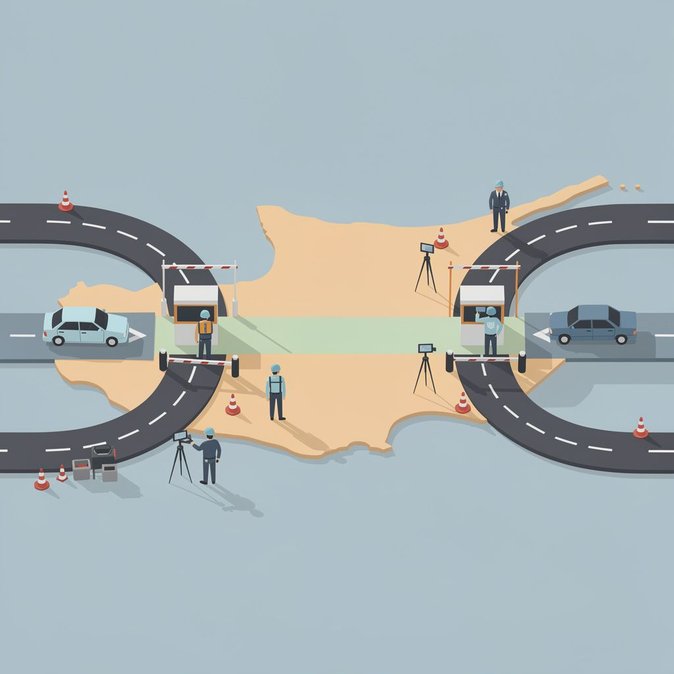
Just two days after Greek-Cypriot President Nikos Christodoulides and Turkish-Cypriot leader Tufan Erhurman agreed to open two additional road crossings, the bi-communal Technical Committee met on 11 November to map out the early engineering work. The new checkpoints—Louroutzina–Lybia in the south-east and Kampos–Karavostasi in the north-west—will be the first added since 2015 and are meant to ease chronic congestion at existing gates. Committee members will spend the next week conducting site visits inside the UN-controlled buffer zone. At Kampos they must upgrade a dirt track, clarify land-ownership issues and coordinate with UNFICYP over security arrangements. The Louroutzina link is shorter and less complex, but both crossings are scheduled to open simultaneously to avoid political wrangling over sequencing. Cyprus currently operates nine vehicular crossing points along the 180-kilometre Green Line. Traffic can back up for hours at the busiest posts, disrupting workers who commute daily between north and south, cross-border supply chains and the growing number of tourists who drive rented cars across the divide. For the Customs Department, the expansion is a logistical headache. Officials warn that staffing even one extra gate requires about 25 officers and €250,000 in annual running costs. They have asked the finance ministry for additional headcount or risk pulling inspectors from ports and airports. Companies that run shuttle services, courier firms and day-tour operators stand to gain from the shorter routes, but only once road works and IT links for vehicle checks are finished—something industry insiders say could take 12-18 months. Until then, mobility planners should build extra transit time into itineraries that rely on the buffer-zone crossings.
Source: AlphaNews