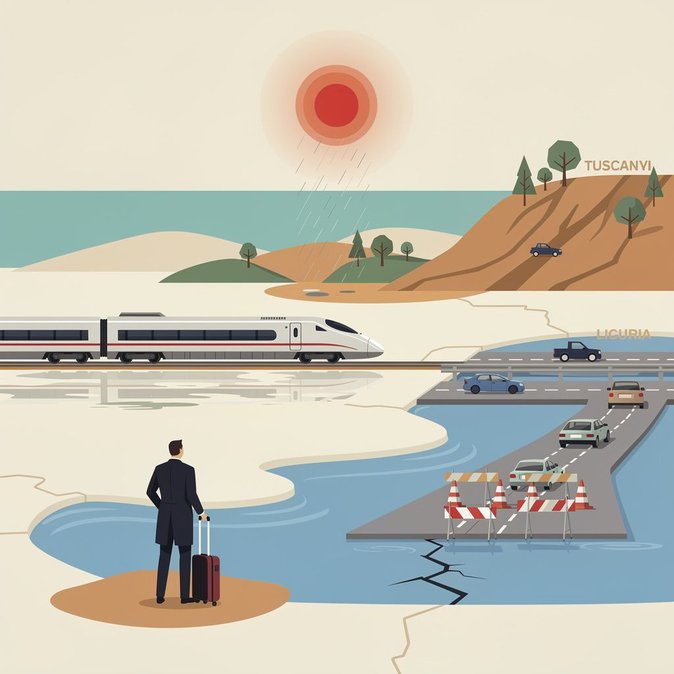
An intense Atlantic weather front swept across central-northern Italy overnight and through the morning of Friday 13 November, triggering a red-alert civil-protection warning in western Tuscany and an orange alert in large areas of Liguria, Emilia-Romagna and Umbria. The Civil Protection Department’s 14:34 bulletin reports hydraulic and hydro-geological risk on multiple river basins, with the Bisenzio-Ombrone, Serchio and Arno catchments all on flood watch. The worst damage so far is concentrated in the Lucchesia, where the Serchio burst its banks in several spots. A landslide on state road SS-12 at Bagni di Lucca blocked traffic minutes after police had closed the carriageway, sparing motorists but cutting the Garfagnana off from the coast. Entire neighbourhoods in Ponte a Serraglio were invaded by mud; the Region has opened emergency shelters and President Eugenio Giani, visiting the area, described the situation as “dramatic, with substantial losses to homes and businesses”. Road disruption is mirrored on the rails. Rete Ferroviaria Italiana (RFI) has cancelled or curtailed dozens of InterCity, Freccia and regional trains on the Pisa–La Spezia, Viareggio–Lucca and Pontremoli corridors and activated replacement buses where possible. Passengers travelling between Milan or Genoa and Rome face diversions or extra connections; freight operators are being rerouted via Bologna with limited daytime paths. For business travellers the practical impact is immediate: drive-times between Florence, Pisa and the Ligurian ports have doubled, delivery slots at the Livorno and La Spezia terminals are slipping, and regional airports at Pisa and Florence are reporting knock-on delays because crews and ground staff cannot reach the apron. Employers with assignees in the area are advised to activate duty-of-care checks, tell remote staff to work from home where possible, and anticipate two to three days before full service is restored once the rain band moves south on Saturday. The episode underlines a wider trend: ever more frequent ‘medicane’-style storms striking Italy’s fragile Apennine watershed. Companies that rely on the Tyrrhenian logistics spine should review contingency routing, ensure relocation policies allow temporary housing for flooded assignees, and build extra lead-time into November–December shipment schedules.
Source: Il Tirreno / Protezione Civile