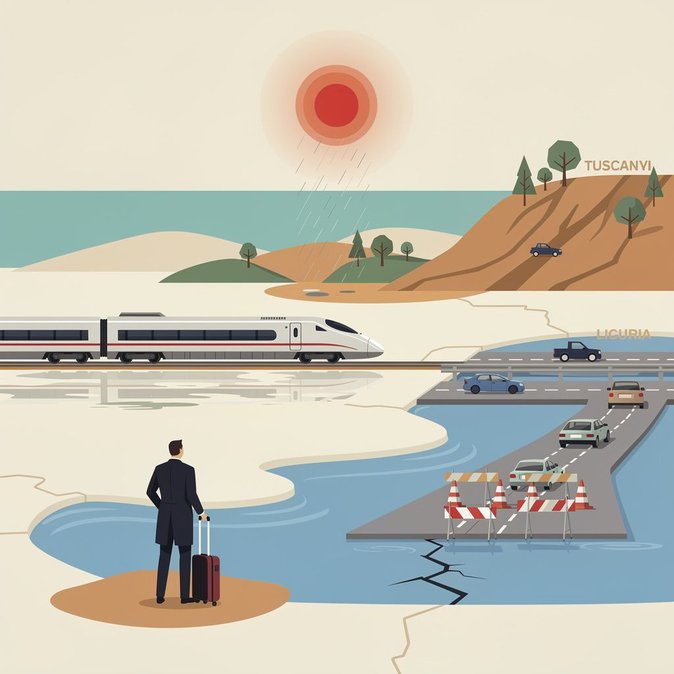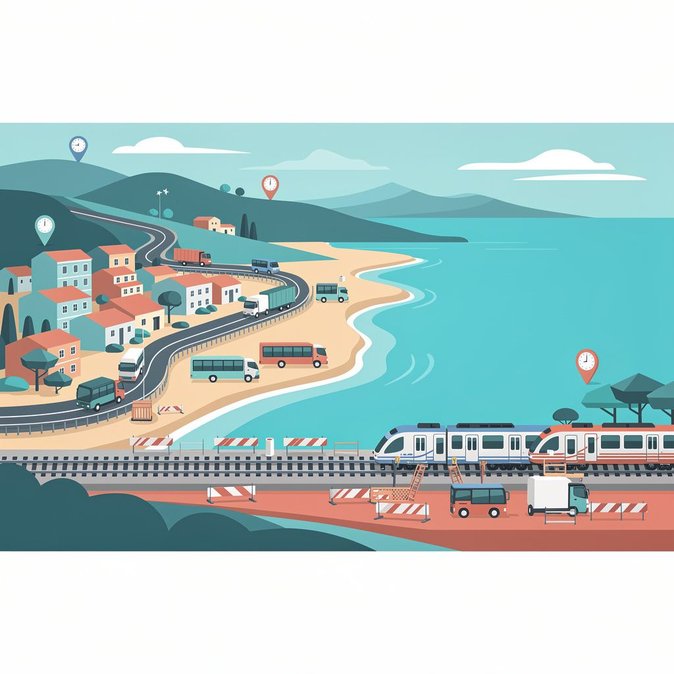
Rete Ferroviaria Italiana (RFI) has begun a 70-hour maintenance blockade on the Ventimiglia–Genoa–Pisa–Rome coastal corridor and on the Viareggio–Lucca and Pontremoli spurs. From 01:15 on Friday 13 November until 04:00 on Monday 16 November no trains will run between Pietrasanta–Pisa Centrale, Corniglia–La Spezia Centrale and Viareggio–Lucca, while catenary and signalling crews replace switches and inspect tunnel linings. The shutdown affects four categories of service: Frecciarossa/Frecciargento high-speed links between Genoa, Milan and Rome; InterCity day and night trains on the Turin–Salerno and Ventimiglia–Rome axes; EuroCity services to Zürich; and a dense web of regional trains connecting Ligurian resorts and Tuscan industrial hubs. RFI and Trenitalia have provided bus substitution on certain stretches, but bicycles and large pets are not accepted and journey times can double. For exporters the line is critical: it carries around 22% of Italy’s north-south maritime containers and is the gateway for marble from Carrara, fruit from the Metaponto plain and French-bound automotive components. Logistics operators have been advised to reroute via the Po valley or postpone time-critical cargo. Peak-hour commuters into Genoa and Pisa are expected to face severe crowding on alternative regional lines. While the works were scheduled months ago, the overlap with the current severe-weather emergency has amplified disruption. Companies with posted workers in the Cinque Terre or Lucca districts should arrange accommodation close to worksites or offer mileage reimbursement for longer diversions. RFI says the project will cut five minutes off long-distance timings and raise axle-load capacity once complete. The operation illustrates the growing pressure on Italy’s mid-20th-century coastal network. Planned EU TEN-T upgrades will gradually four-track the route, but for now stakeholders must factor periodic multi-day closures into mobility planning each autumn and spring.