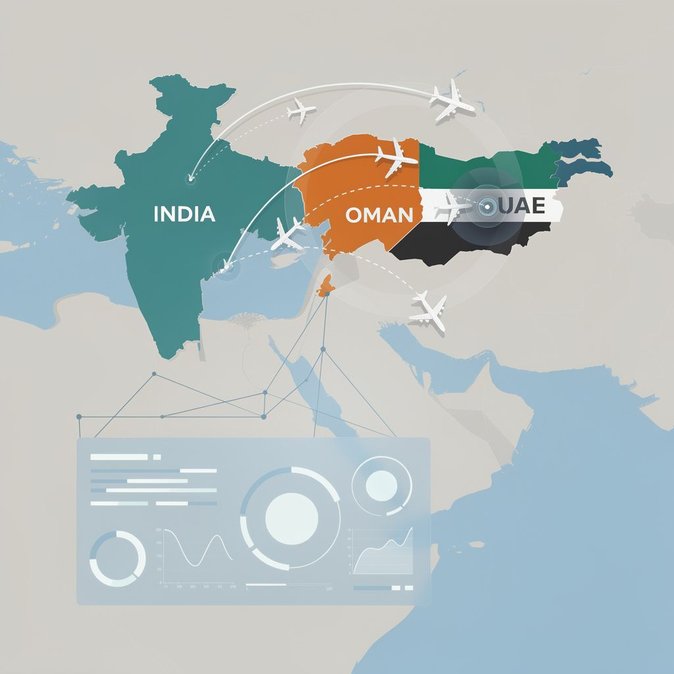
Seeking to add structure to an increasingly complex regional airspace picture, civil aviation authorities from India, Oman and the United Arab Emirates have agreed to form a trilateral technical committee dedicated to coordinating contingency flight paths across the Gulf. Details of the agreement were confirmed in a 15 November update on the UECN Middle East Travel Alerts platform, following an announcement by India’s Civil Aviation Minister Ram Mohan Naidu. The working group will align NOTAM issuance, share radar-tracking data and map out alternative routes that airlines can activate when conflict-zone advisories or drone activity close primary corridors—an issue that has repeatedly forced carriers to detour via Iranian or Red Sea airspace, incurring higher fuel costs and extended block times. For multinational employers that shuttle personnel between South Asia and the UAE, coordinated notices could translate into more predictable schedules and quicker slot revalidations when diversions occur. Cargo operators moving time-sensitive shipments such as pharmaceuticals or oil-field equipment likewise stand to benefit from clearer, harmonised procedures. The committee is expected to meet before year-end, with initial deliverables including a common database of preferred contingency routes and a framework for real-time risk-information sharing. Companies with high flight volumes through Muscat and Mumbai hubs should monitor subsequent communiqués for specific procedural changes.
Source: UECN – Middle East Travel Alerts