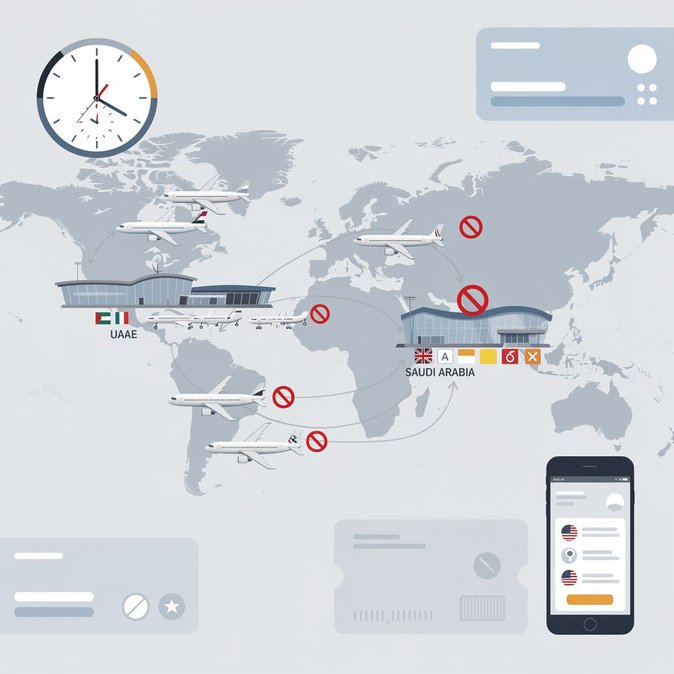
Travellers flying out of the UAE faced another morning of uncertainty on 15 November after Emirates, Etihad, flydubai and Air Arabia issued fresh schedule changes in response to regional security risks and knock-on effects from the previous day’s ground stop in the United States. According to airport status boards reviewed at 08:00 local time, more than 30 departures and arrivals at Dubai International and Zayed International were either cancelled outright or delayed by more than two hours. Saudi routes remain the hardest-hit: Etihad has now extended its suspension of Abu Dhabi–Riyadh and Abu Dhabi–Dammam flights through 19 November, while Flynas scrubbed multiple Dubai–Riyadh rotations. Emirates is flying a reduced schedule to Jeddah and Medina but is not yet selling seats to Riyadh this week. Outside the Gulf, the ripple effects of Friday’s four-hour nationwide ground stop in the United States are still being felt. The Federal Aviation Administration says US operations should normalise by Sunday night, yet UAE-bound flights from New York and Chicago were still posting delays of up to three hours on Saturday evening. Corporate mobility managers moving staff to North America have been urged to build additional layover buffers and to issue refreshed duty-of-care guidance covering missed connections. A separate headache is the continuing suspension of services operated by Iranian carriers following last month’s UAE aviation directive. Travel-management companies (TMCs) note that re-routing through Muscat or Doha is adding both time and cost for passengers holding Iranian passports or needing to reach secondary cities in Iran. UAE authorities reiterate that airport operations remain safe and that security levels are unchanged, but they advise passengers to arrive early and monitor real-time flight trackers. From a policy standpoint, the episode highlights the importance of contingency planning: firms with high-volume traveller footprints into Saudi Arabia and the US may wish to re-examine their ‘alternative routing’ playbooks and consider split-ticketing options that give travellers more self-service flexibility when disruptions cascade.
Source: Gulf News