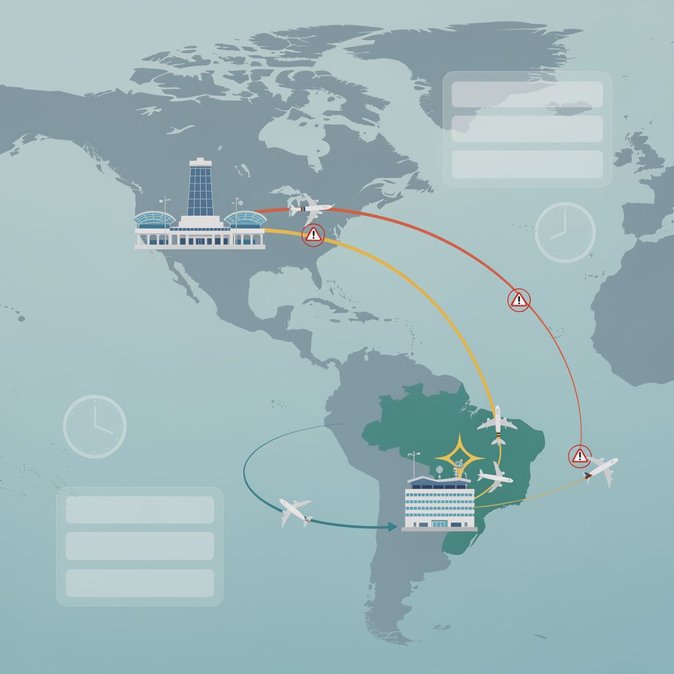
With Brazil’s Proclamação da República public holiday falling on a Sunday this year, millions of Brazilians are taking advantage of an unofficial “super-feriado” that stretches into Monday. In its 09:00 UTC travel-risk bulletin for 15 November, analytics firm A1 Inteligência de Viagens classified national travel risk as “low” but forecast “extraordinary passenger volumes” at São Paulo/Guarulhos (GRU), Rio/Galeão (GIG), Rio/Santos Dumont (SDU) and Brasília (BSB) between 14 and 18 November. The spike is driven by three overlapping events: the Festuris Gramado tourism trade show (12–15 Nov), today’s Republic Day holiday and the Copa do Brasil football final in Rio on 18 November. Historical data show that GRU’s security wait times can double during comparable holiday/event clusters, while SDU routinely exceeds its declared runway capacity in the late-afternoon departure bank. A1 recommends that business travellers book airport transfers at least 48 hours in advance, use fast-track security products where available, and avoid connecting itineraries with less than 90 minutes between flights at GRU or GIG. Companies with fly-in-fly-out rotas should consider staggering crew changes to sidestep the Monday-morning rush, when domestic load factors typically surpass 95 percent. Airlines are already reacting: LATAM added 34 extra sections on the Rio–São Paulo shuttle, and Azul up-gauged several Recife and Porto Alegre services to Airbus A321neo aircraft. Airport operators have increased frontline staffing by up to 20 percent and extended parking-lot shuttle frequencies. For mobility managers, the holiday surge reinforces the importance of marrying macro-level travel-risk data with internal trip-approval workflows. Embedding such alerts into booking tools can nudge travellers toward off-peak departures and reduce the likelihood of missed connections and overtime charges linked to extended ground-transport waits.
Source: A1 Inteligência de Viagens