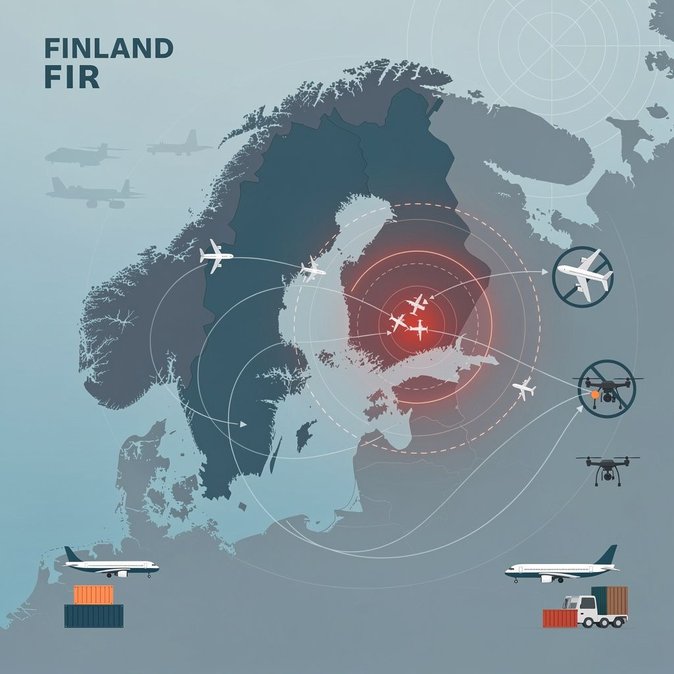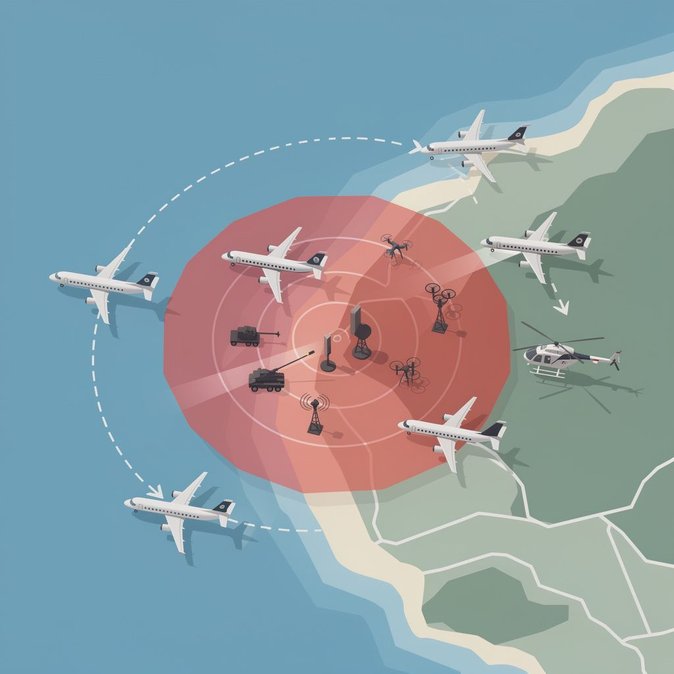
Finland’s Defence Forces have notified civilian airspace users of a Temporary Danger Area (TDA) labelled EFD573 “Mallet Strike 2/26,” active from 05:00 UTC on 15 November until 12:00 UTC on 18 November 2026. Centred on the coastal artillery and drone-testing range at Lohtaja, Central Ostrobothnia, the TDA extends from the surface to FL330, effectively closing a swath of airspace that north-south general-aviation traffic normally uses to skirt controlled areas. The timing overlaps with the larger Pohjanmaa exercise farther south, compounding route-planning complexity for charter operators feeding regional hubs such as Kokkola-Pietarsaari (KOK). Eurocontrol’s initial modelling suggests up to 25 additional nautical miles for IFR routings between Rovaniemi and Turku, adding fuel burn and potentially pushing some Cessna Citation and Embraer Legacy flights into a technical fuel stop. Finnish logistics providers moving wind-turbine components from the Port of Kokkola report no maritime exclusions, but heavy-lift helicopter operations supporting offshore projects must coordinate tightly with the Lohtaja range controller. Businesses flying aerial-photography or power-line inspection missions in Ostrobothnia are urged to reschedule or relocate. The activation highlights Finland’s layered approach to training air-defence and counter-drone tactics following its integration into NATO’s Integrated Air and Missile Defence (IAMD) framework. Corporate mobility teams should note that Finland typically publishes TDAs only 7–10 days in advance, leaving limited room for last-minute itinerary changes. Subscribing to AIS trigger NOTAM feeds and integrating them into travel-management systems can provide early warning. Although the immediate operational impact is localised, repeated closures of low-level airspace could accumulate cost for the forestry, mining and renewable-energy sectors that rely on aerial services. Stakeholders may wish to engage with Traficom’s upcoming consultation on flexible-use airspace to secure more predictable access during military drills.
Source: AIP Supplement 146/2026