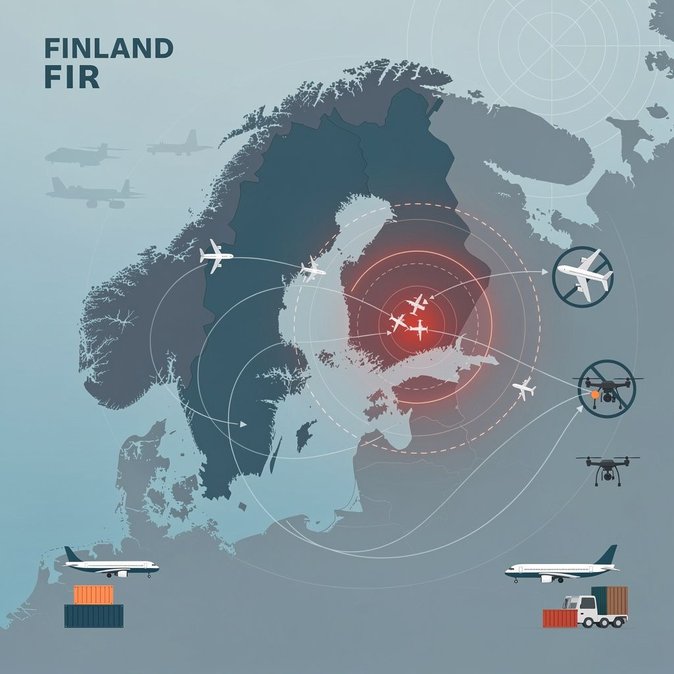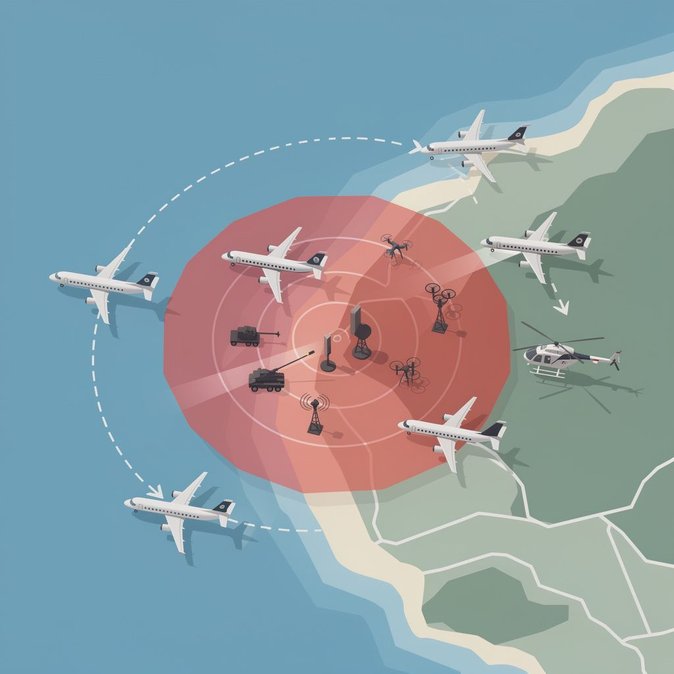
Within hours of the airspace restrictions for “Pohjanmaa 2/26,” Finland’s Notice to Air Missions (NOTAM) office published an urgent advisory (EFIN B2082/26) stating that “GNSS signal interference can be expected in Helsinki FIR” on 15 November 2026. Similar warnings were simultaneously released for Tallinn FIR, pointing to a broad jamming footprint over the Gulf of Finland. The interference—widely attributed by Nordic officials to Russian electronic-warfare units in Kaliningrad and the Kola Peninsula—degrades satellite-based navigation, forcing aircraft to revert to inertial, DME/DME or VOR tracking. Finnair confirmed that several inbound Airbus A320 family flights briefly lost GPS lock on approach to runway 22L but landed safely using conventional ILS procedures. The airline has reminded crews to cross-check positional data and to brief raw-data approaches where necessary. Business-jet operators reported minor ATC delays as controllers increased separation to accommodate mixed-navigation capability. For companies operating unmanned aircraft—particularly survey drones around Helsinki’s construction boom—the timing is critical. Under EU Regulation 947/2019, Remote Pilots must abort flight if navigation integrity cannot be guaranteed. Finnish drone logistics start-up Skyfarer temporarily suspended same-day medical deliveries between Lahti and Espoo, redirecting transport to road couriers. The persistence of jamming across Northern Europe has wider supply-chain implications. EASA’s January 2026 Safety Information Bulletin already urges airlines to maintain alternative procedures, and insurers are beginning to ask corporates for proof of GNSS-loss resilience in travel-risk assessments. Mobility managers should ensure that employees’ electronic flight bags (EFBs) contain up-to-date raw-data plates and that travel-approval workflows include contingency time for navigation outages. While no end time was provided, previous episodes lasted 6-12 hours. Travellers with critical same-day meetings in Helsinki should monitor airline alerts and consider videoconference back-ups. Cargo stakeholders should flag possible ETA slips to downstream recipients, especially for just-in-time spare-parts consignments.