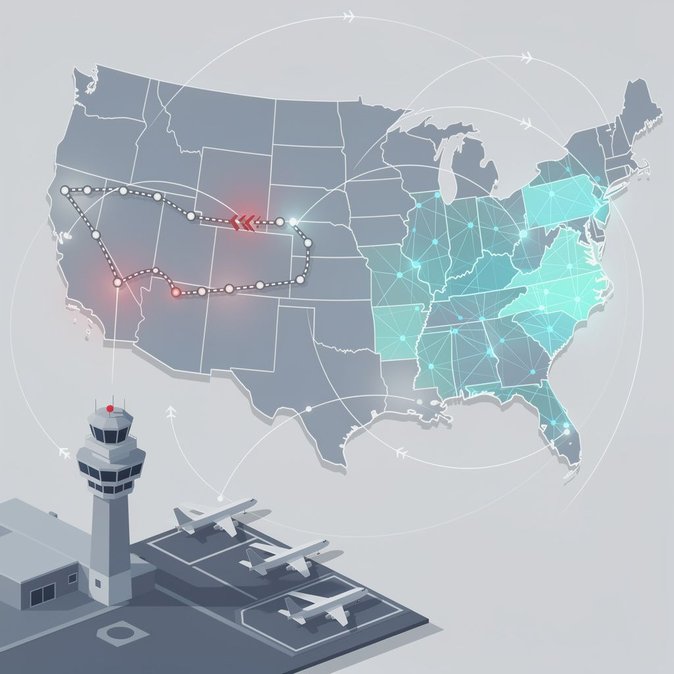
Aviation-systems engineers interviewed by the Associated Press say Friday’s failure underlines the fragility of the FAA’s “spoke-and-hub” telecom network, a patchwork of leased copper and microwave links supporting 22 regional control centers. Because messages are daisy-chained, a bottleneck in one segment can propagate nationally—exactly what happened when upgraded routers sent more data than legacy switches could process. Consultants at MITRE propose migrating to a mesh configuration with autonomous routing, similar to military air-defense grids. The approach would cost an estimated US $18 billion but allow individual sectors to isolate faults without halting departures nationwide. European air-navigation service provider Eurocontrol adopted a limited mesh overlay in 2024 and has since reduced weather-related cascading delays by 42 percent. Technology vendors are lobbying for software-defined networking (SD-WAN) to prioritise controller voice traffic over less critical radar meta-data, while unions for air-traffic controllers caution that new systems must be extensively simulation-tested to avoid information overload in the tower. For firms that rely on tight just-in-time delivery—including semiconductor fabs and life-science labs—the debate affects bottom lines. Mobility managers should track FAA-procurement milestones: pilots of the new architecture are pencilled for Dallas–Fort Worth and Seattle ARTCCs in 2027, and temporary air-space flow programs could complicate flight-duty times for assignees.
Source: Associated Press