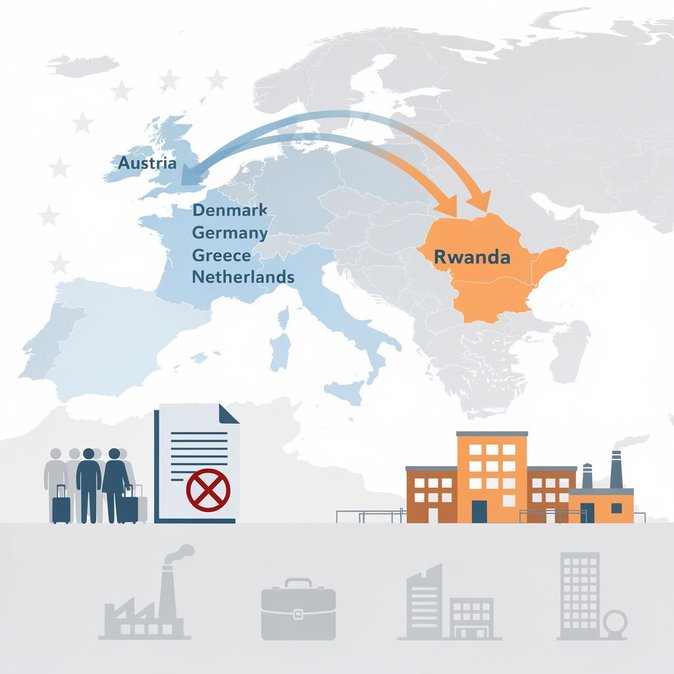
Austria has placed itself at the centre of Europe’s toughest migration debate by unveiling a joint plan with Denmark, Germany, Greece and the Netherlands to open the EU’s first “return hub” for rejected asylum-seekers in Rwanda as early as 2027. Announced in Vienna on 16 November by Chancellor Christian Stocker alongside Danish Prime Minister Mette Frederiksen and Rwanda’s Interior Minister Vincent Biruta, the proposal would allow the five countries to transfer migrants whose asylum applications have been finally refused to a purpose-built facility near Kigali. The pilot relies on the new EU Return Regulation adopted in June, which for the first time permits member states or coalitions of member states to process returns in safe third countries. Austrian officials say negotiations with Rwanda will begin immediately, with legal, humanitarian and funding details to be finalised “within months”. If concluded, the agreement could see the first transfers in the second half of 2027, with operating costs shared among participating nations. Supporters argue that external processing will deter irregular crossings, break the business model of smugglers and relieve pressure on overcrowded reception centres inside the EU. Chancellor Stocker called the move “a historic paradigm shift that restores credibility to Europe’s asylum system”, noting that Austria now removes more people than it receives new asylum claims. Human-rights groups, including Amnesty International Austria, sharply criticised the plan, warning that Rwanda cannot be considered a safe country and that outsourcing responsibility undermines international protection standards. Legal experts predict challenges in the European Court of Human Rights, but government lawyers insist the scheme complies with EU law and the Geneva Convention because deportees have already exhausted all legal remedies. For global mobility managers the implications are significant: companies may see faster decisions on employee family reunification cases as officials redirect resources from repeat asylum files; at the same time, the political spotlight on removals could harden Austria’s stance on discretionary residence permits. Multinationals with transferees in Vienna should monitor the forthcoming bilateral treaty for any data-sharing or sponsorship obligations that might indirectly affect corporate immigration processes.
Source: Associated Press