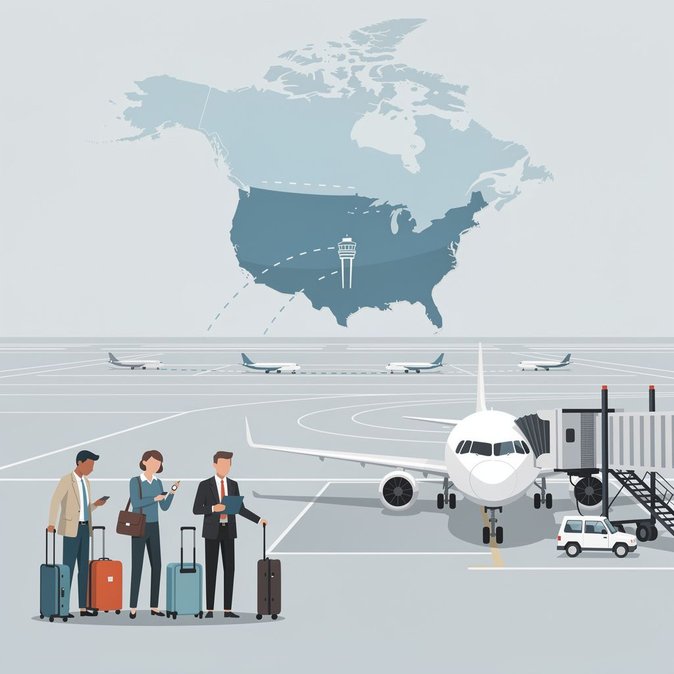
Canadian business travellers endured a second straight day of schedule chaos on 15 November after the U.S. Federal Aviation Administration (FAA) lifted a rare nationwide ground-stop order late Friday. Although the halt applied only to departures from U.S. airports, the knock-on effects spilled across the border because almost every trans-border flight—and hundreds of longer-haul services that transit U.S. air-space—was forced to re-file flight plans or wait for gate space. At Toronto Pearson, Canada’s busiest hub, Air Canada cancelled roughly 250 flights, displacing an estimated 27,000 customers and leaving aircraft and crews badly out of position. Calgary International recorded 47 cancellations and nearly 50 additional delays Saturday, while WestJet, Porter and Flair all warned passengers to expect rolling disruptions through the weekend. WestJet issued a flexible rebooking policy that allows no-fee changes or cancellations for itineraries touching the continental United States, Mexico or the Caribbean through 15 November. The FAA said the unprecedented shutdown—reported to be the longest since the aftermath of 9/11—occurred during a contractor’s attempt to switch legacy copper cabling to fibre-optic lines. U.S. Transportation Secretary Sean Duffy ruled out a cyber-attack, but acknowledged the fragility of North America’s ageing air-traffic infrastructure and hinted that an additional US $30 billion in modernization funding may be required. Canadian aviation analyst John Gradek of McGill University noted that the complexity of integrating “30 different systems that must talk to each other” means faults can cascade quickly. For corporate mobility managers, the episode underscores the exposure of Canadian operations to U.S. infrastructure failures. Companies with cross-border commuters were forced to arrange urgent video-conferencing alternatives, while those with time-sensitive cargo faced costly diversions via ground transport. Travellers are being advised to monitor flight-status apps closely, build extra buffer time into itineraries for the next several days, and keep hotel and ground-transport reservations flexible. Airlines expect to clear most backlogs by late Sunday, but experts caution that crew-duty limitations and aircraft repositioning could create further ripple delays into the early work week. Forward-looking corporates may wish to revisit contingency plans, including alternative routing through Montreal, Vancouver or direct Europe-Asia services that bypass congested U.S. airspace altogether.
Source: Global News