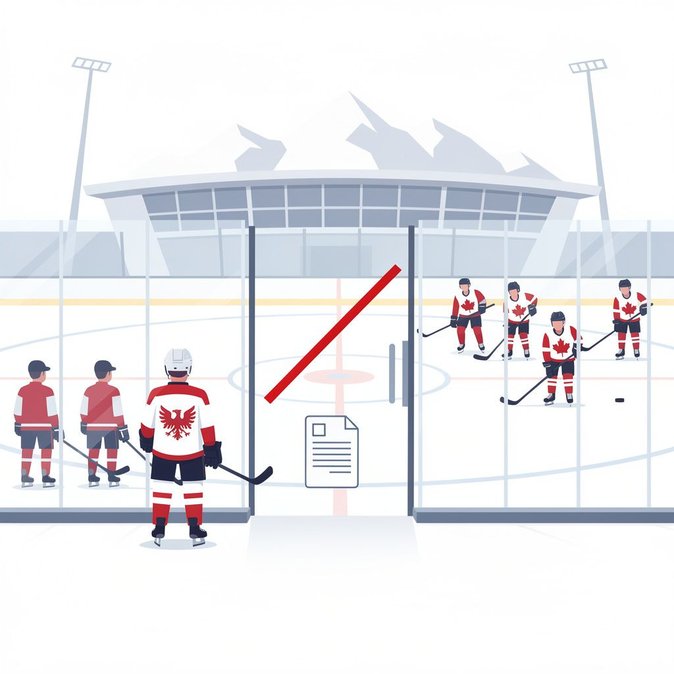
The International Ice Hockey Federation (IIHF) confirmed late on 15 November that Russia’s U-20 national team will not compete in the 2026-27 World Junior Championship after failing to secure clearance under Canadian government restrictions. The tournament will proceed in Edmonton and Red Deer from 26 December to 5 January with 10 teams instead of the usual 11. While the IIHF statement cited "the position and restrictions formally communicated by the Canadian Government," officials did not detail whether the issue related to visa issuance, sanctions, or broader foreign-policy considerations. Since Russia’s invasion of Ukraine in 2022, Ottawa has progressively tightened travel and financial sanctions against Russian entities, and federal guidelines allow the denial of visas on security or foreign-policy grounds. Tournament organisers stated that schedules and ticket allocations would be re-worked within 10 days, emphasising that fans holding Russia-related match tickets will receive automatic refunds. Hockey Canada expressed support for the IIHF decision, noting that it aligns with "Canada’s existing sanctions regime and commitments to international partners." From a global-mobility perspective, the case underscores the discretionary power of the Immigration and Refugee Protection Act, which permits the Minister to refuse temporary-resident visas when foreign-policy or public-safety concerns arise. Sports federations and event planners bringing teams to Canada should engage immigration counsel early, especially when participants are subject to sanctions or travel bans. The exclusion also carries commercial implications: broadcasters must adjust schedules, and local tourism bodies estimate a 6-8 % hit to out-of-country visitor numbers. However, Alberta’s organising committee said the overall economic impact would remain above CAD 50 million, helped by strong U.S. ticket sales.
Source: Associated Press