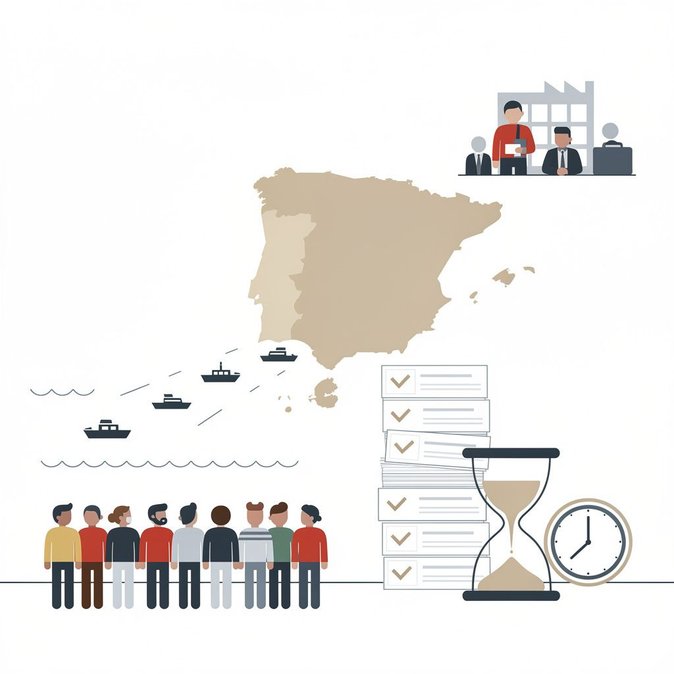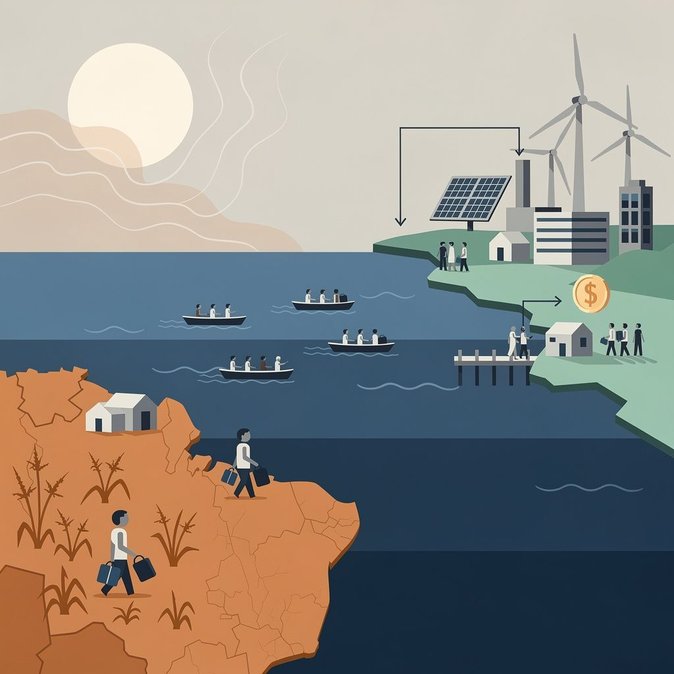
An in-depth feature in El País’ Planeta Futuro section argues that intensifying climate impacts in West Africa and the Sahel are accelerating migration flows toward Spain, and that poorly managed arrivals could, in turn, hamper Spain’s own adaptation resources—creating a “vicious circle”. Drawing on World Bank projections and testimonies from Senegalese farmers now living in Tenerife, the article describes how droughts push rural populations toward coastal cities, where economic stagnation and political unrest drive them onto Atlantic smuggling routes. Spanish climatologist Sergio Vicente tells El País that sea-surface temperatures along the Canary current are rising 0.3 °C per decade, altering fish stocks and further undermining West African livelihoods. Meanwhile, Spain’s Canary Islands must divert millions of euros from renewable-energy projects to emergency migrant accommodation, delaying local emissions-reduction goals. Policy experts interviewed advocate for a two-pronged response: large-scale EU climate-adaptation funding for origin countries coupled with labour-mobility schemes that allow safe, legal entry to Spain for seasonal work. They point to pilot circular-migration agreements with Morocco as a template. For global-mobility professionals, the piece is a reminder that climate drivers will increasingly intersect with corporate duty-of-care. Companies may need to update relocation-risk matrices to include environmental-migration hotspots and to anticipate evolving EU visa pathways tied to climate resilience. Although analytical rather than breaking news, the article shapes public discourse ahead of Spain’s 29 November election, in which migration and green investment rank among top voter concerns.
Source: El País – Planeta Futuro