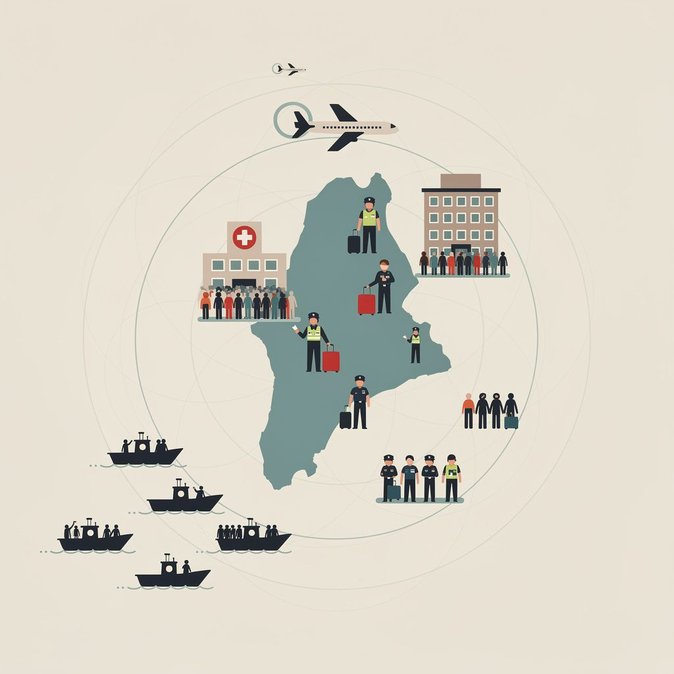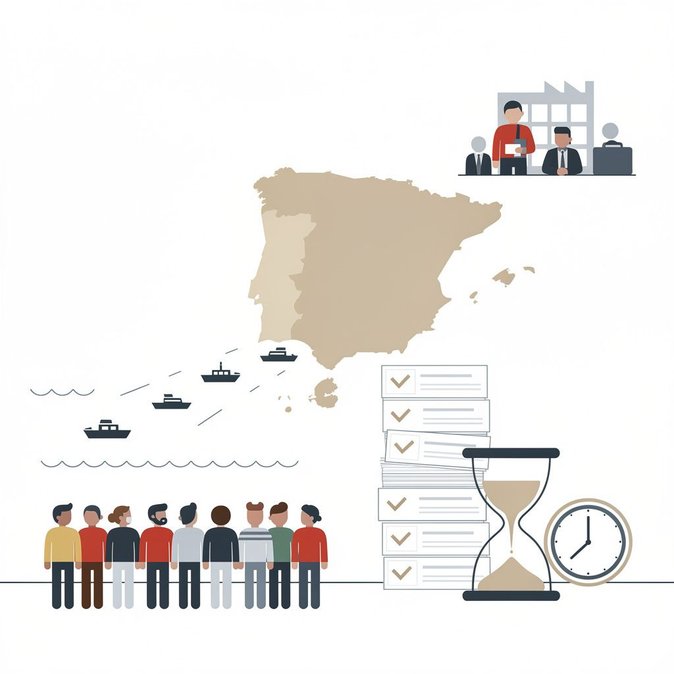
Interior-Ministry data released on Monday show that 44,215 irregular migrants have entered Spain so far in 2026, a 39.4 percent increase on the same period of 2025. Sea crossings to the Canary Islands account for 72 percent of the total, while arrivals on the Mediterranean route to Andalusia fell slightly. The statistics also highlight a demographic shift: Senegal now ranks first among declared nationalities, ahead of Morocco and Guinea, reflecting instability in parts of West Africa. The ministry confirmed that 18,900 asylum applications were lodged in the first ten months of the year, but only 7 percent have been resolved, intensifying backlogs at the Oficina de Asilo y Refugio. For employers, the surge compounds delays in obtaining work-authorisation appointments for prospective hires who entered irregularly but may later qualify for regularisation under Spain’s “arraigo laboral” scheme. Immigration lawyers report that the average wait time for a regularisation interview in Madrid has stretched to 11 months. The Confederation of Employers and Industries of Spain (CEOE) said the backlog is beginning to affect sectors that rely on hiring from the pool of regularised migrants, including hospitality and elder-care. It called on the next government—due to be elected on 29 November—to increase staff at foreigner-offices by at least 20 percent. Global mobility teams should advise assignees who require in-country processing of residence permits to build longer lead times into relocation schedules and to watch for possible emergency decrees after the election.
Source: Europa Press