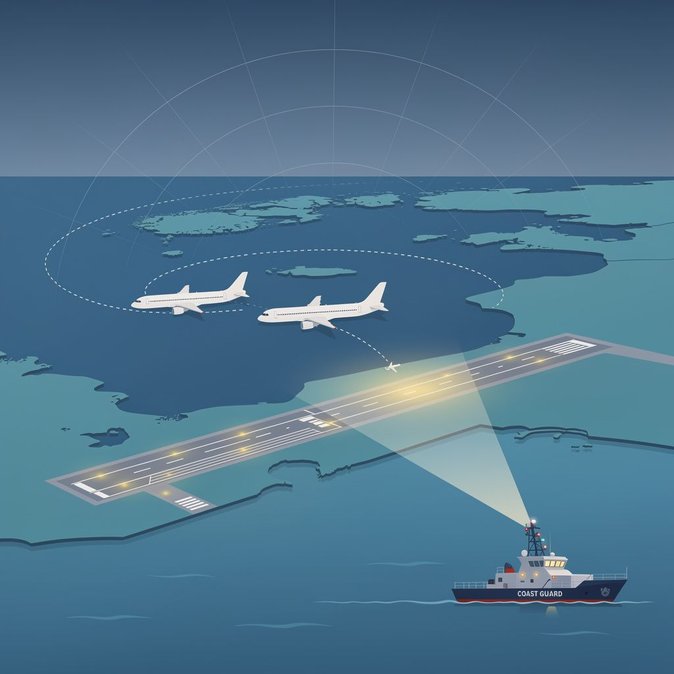
Finland’s Gulf of Finland Coast Guard District has launched a formal investigation into a five-minute airspace violation detected over the eastern Gulf on Monday afternoon, 16 November. According to the service’s weekly bulletin, radar tracks indicated an unidentified drone or small aircraft crossing the Finnish boundary before turning back toward Russian waters. As a precaution, air-traffic control instructed Turkish Airlines flight TK403 from Istanbul to St Petersburg and AlMasria United UJ771 from Cairo to divert to Helsinki-Vantaa Airport, their filed alternate. Both aircraft landed without incident and continued to their original destination once the temporary restriction was lifted. No delays were recorded for outbound traffic, but the episode underscores heightened sensitivity along the 1,340-kilometre border, which has been closed to land crossings since December 2023. Finnish authorities have stepped up aerial surveillance in the region following a series of GNSS-jamming incidents affecting civil aviation in early November. The Defence Forces confirmed that fighter aircraft were scrambled in Monday’s incident; the object had exited Finnish airspace before interception. Under the Airspace Surveillance Act, the Coast Guard will coordinate with the Police and the Finnish Transport and Communications Agency (Traficom) to determine whether criminal charges—such as unlawful use of airspace—are warranted. For travel managers, the diversion highlights the operational fragility of routes that parallel the Russian border. Airlines serving St Petersburg and the Baltic region are re-evaluating alternates and fuel policies, while insurers are likely to revisit war-risk premiums for flights within 200 NM of the boundary. Companies with tight connection windows at Pulkovo Airport should monitor NOTAMs and build contingency time into itineraries this week. The Coast Guard emphasised that search-and-rescue readiness remains unaffected and that no commercial shipping lanes were disrupted. A preliminary report is expected within seven days; the incident will also feed into Finland’s broader hybrid-threat monitoring framework.
Source: ePressi / Finnish Coast Guard