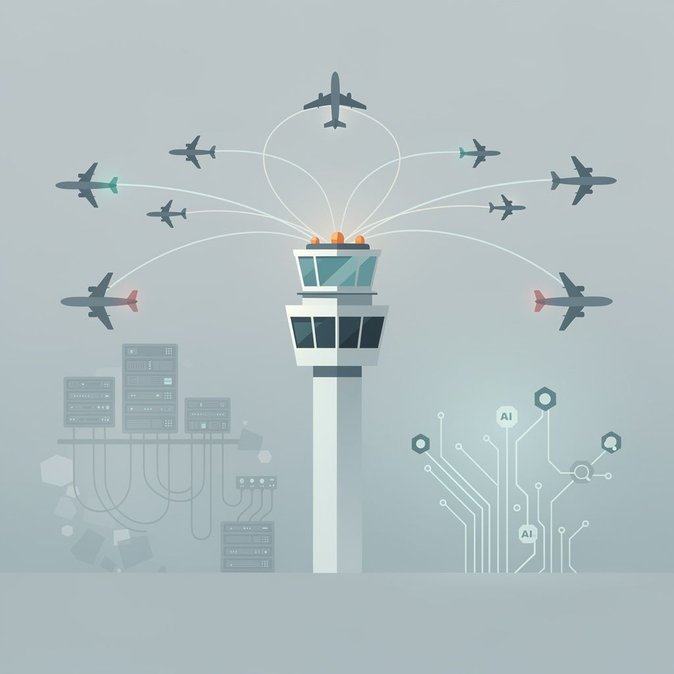
Federal Aviation Administration officials moved quickly on Monday to quash social-media rumors that the 13 November ground stop was triggered by the agency’s nascent SMART artificial-intelligence traffic-management platform. The $875 million predictive-analytics system—developed by Silicon Valley start-up Air Space Intelligence (ASI)—is currently in limited trials in the Washington Air Route Traffic Control Center. “The outage had no connection to SMART, any ASI product, or our integration with FAA and ATC,” ASI said in a statement, adding that test deployments have so far rerouted 180 flights around weather and saved an average 10 minutes and 80 gallons of fuel per flight. FAA Acting Chief Information Officer Maria Garza told reporters the ground stop stemmed from “legacy telecommunications hardware” and not the AI rollout. Nevertheless, lawmakers on the House Transportation and Infrastructure Committee requested a briefing, citing concerns that parallel modernization efforts could introduce single points of failure. For corporate flight departments and travel-risk managers, the clarification matters. If SMART delivers predicted efficiencies without adding instability, airlines could realize lower fuel bills and more on-time performance—benefits that cascade to business travelers. But Monday’s messaging also serves as a reminder that the world’s busiest air-traffic system still depends on aging backbone networks slated for overhaul. Mobility professionals should watch for FAA progress reports due in January; any delays to SMART’s national deployment could prolong existing congestion hot-spots on key trans-con corridors.
Source: AP News