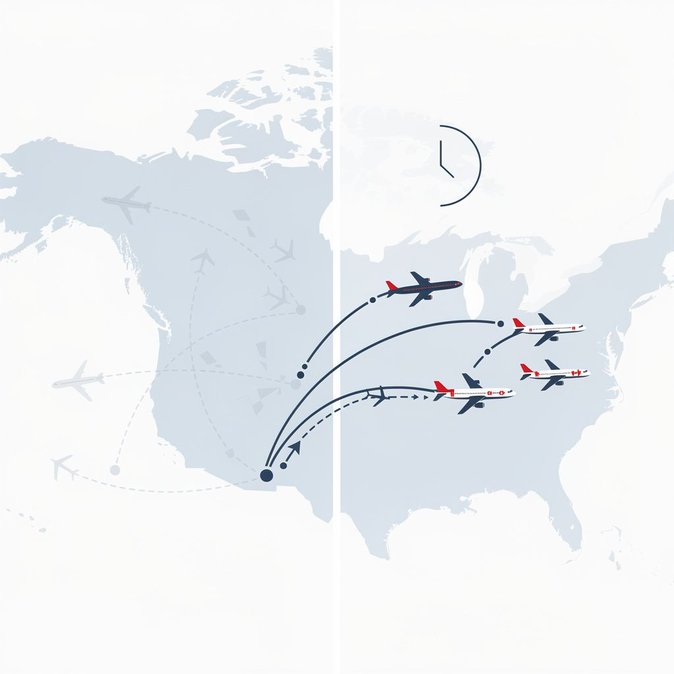
Canada’s major airlines say operations have returned to “near normal” just three days after the United States lifted a nationwide ground stop caused by an FAA telecommunications failure. Air Canada, WestJet, Porter and Flair confirmed on 16 November 2026 that most stranded aircraft have been repositioned and affected passengers rebooked, although Air Canada acknowledged it cancelled about 250 flights—impacting roughly 27,000 travellers—on the first day of the disruption. The 10-hour halt on 13 November was the longest blanket suspension of U.S. flights in 25 years and triggered cascading cancellations on cross-border routes. WestJet offered fee-free changes for travel to the continental U.S., Mexico and the Caribbean over the affected weekend, while Porter reported minimal residual delays as of Monday. The incident underscores the operational interdependence between Canada and the United States. More than 600 transborder flights operate daily, many crewed under the Air Canada-United transborder joint venture. Business travellers without ESTA clearance who rerouted through third countries faced additional visa complications, illustrating the value of contingency planning that includes multiple routings and digital travel policies that allow for rapid self-rebooking. For employers, the quick recovery is reassuring but highlights systemic vulnerabilities. The FAA failure centred on aging copper-wire infrastructure being replaced with fibre—an upgrade mirrored at NAV Canada. Companies with time-critical mobility moves should review travel-risk insurance to ensure coverage for mass delays and incorporate alternative collaboration tools when in-person meetings are jeopardised. Industry analysts predict a short-term uptick in Canadian domestic itineraries as travellers seek to avoid U.S. connections, potentially raising fares on key routes. Travel managers may wish to lock in negotiated rates before seat-inventory tightens heading into the holiday peak.
Source: Global News