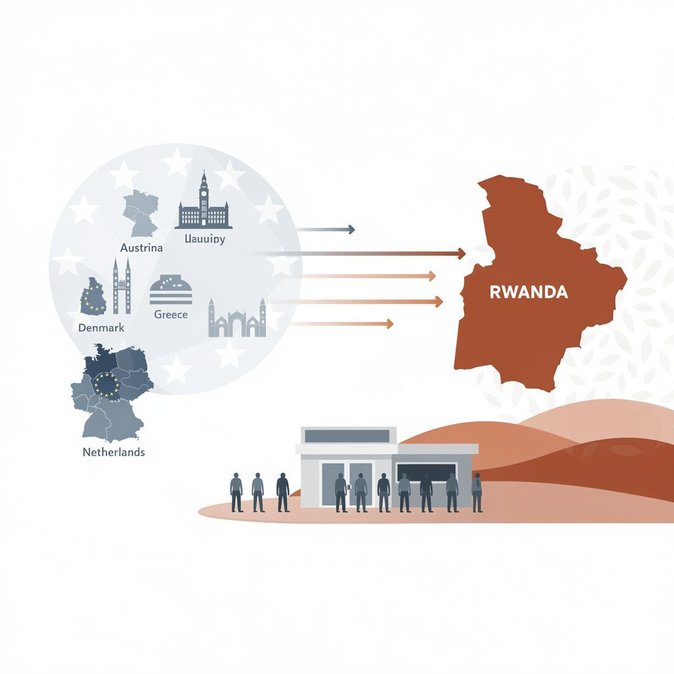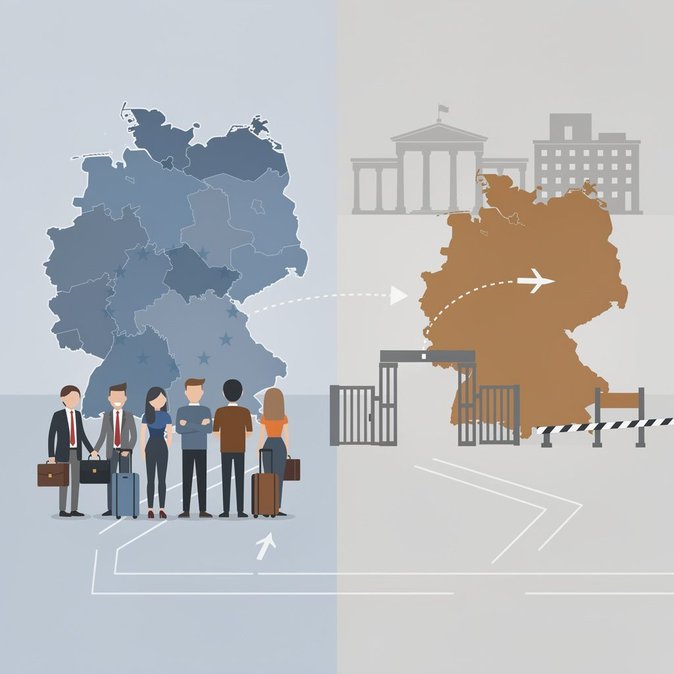
In a joint press conference in Vienna on 16 November 2026, Interior Minister Alexander Dobrindt confirmed that Germany has joined Austria, Denmark, Greece and the Netherlands in negotiating a so-called “return hub” in Rwanda. The facility would receive non-EU nationals whose asylum applications have been finally rejected in any of the five participating states. Austrian Chancellor Christian Stocker and Danish Prime Minister Mette Frederiksen hailed the move as a “game-changer” that will, in their words, “remove the incentive for irregular migration” and “break the smugglers’ business model”. Germany’s signature gives the project heavyweight political backing and paves the way for additional Schengen members to sign up in the coming months. Under the draft memorandum of understanding, Kigali would admit up to 5,000 returnees per year in exchange for a multi-year development package funded mainly from the EU budget. Individuals could—at least on paper—apply for voluntary return to their country of origin, integration in Rwanda, or relocation to a willing third state. European officials insist the hub will comply with the European Convention on Human Rights and that UNHCR will provide independent monitoring; human-rights groups including Amnesty and Human Rights Watch have already dismissed those assurances as inadequate. For Germany, the announcement marks a significant hardening of migration policy. After years of domestic pressure over persistent irregular arrivals along the Balkan route and daily spot checks on the Polish and Czech borders, Berlin now frames offshore processing as an indispensable tool. Government sources say the coalition will table enabling legislation before the Bundestag’s winter recess to allow transfers to third countries that are deemed “safe”. Business travel and corporate mobility managers should watch the legislative timetable carefully. While the measure targets rejected asylum-seekers rather than skilled migrants, it signals that Germany’s migration debate is likely to remain highly charged. Any perception of a harsher climate could affect employer branding, talent attraction and employee-relocation decisions, especially from Africa and the Middle East. Global HR teams may need to step up communications to reassure candidates that the skilled-worker channels (EU Blue Card, Chancenkarte, fast-track procedure) remain open and, in fact, are being expanded in parallel.
Source: AP News