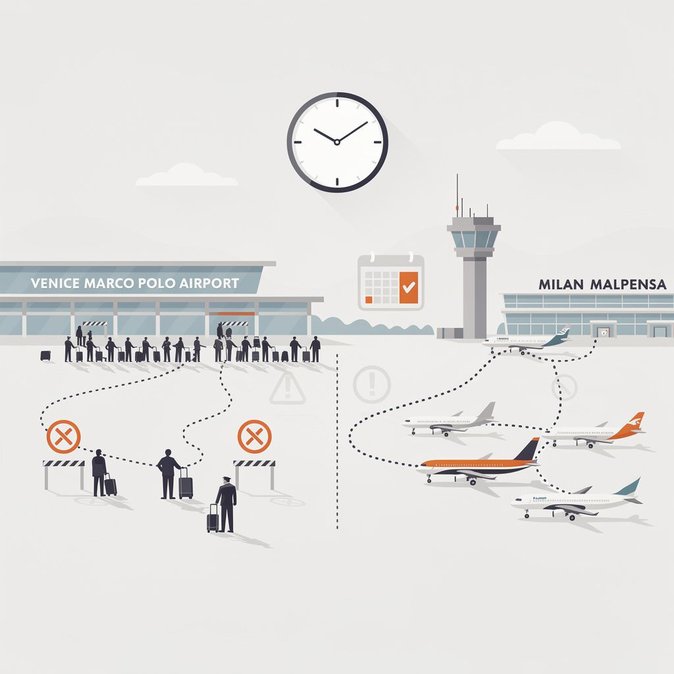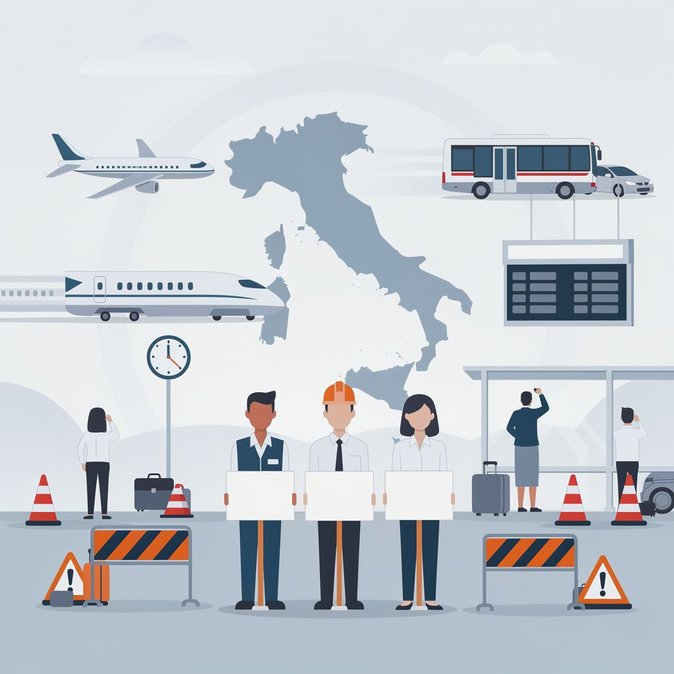
Italian travellers and international business visitors have been warned to brace for a turbulent long-weekend as the country’s largest trade-union confederation, CGIL, prepares a 24-hour general strike this Friday, 20 November. Although Italy’s strike commission has limited the scope of the walk-out by excluding national air- and rail-transport workers, ripple effects are still expected across every major city, with local buses, metro systems and some regional trains set to run reduced services or to stop entirely outside the legally protected peak-hour “guaranteed” windows. From a mobility perspective the most acute disruption will come once the general strike ends. Cub Trasporti and SGB Ferrovie have called a separate 23-hour rail strike beginning at 21:00 on Friday and ending at 20:00 on Saturday. Trenitalia, Italo and freight operators have published lists of “servizi minimi” but warn of widespread cancellations on long-distance and inter-city routes. Travellers planning weekend transfers between Milan, Rome and regional hubs should consider re-timing meetings or booking road transport. Aviation will feel the impact on Sunday, 22 November, when Malpensa’s air-traffic controllers walk out for 24 hours and airport-security staff at Venice Marco Polo stage a parallel strike. Flights into other Italian gateways could still suffer knock-on delays as traffic managers re-route aircraft and crews. Airlines are urging passengers to reconfirm schedules and allow extra time for security formalities. Beyond transport, the strike coincides with student demonstrations in more than 100 towns and cities. Employers should expect road closures around central squares, reduced staffing levels in schools and public offices, and slower processing times for municipal services. Hospitals will maintain emergency cover but have postponed some non-urgent appointments. Embassies, including the U.S. mission in Rome, have issued security alerts advising foreigners to avoid large gatherings. For global-mobility managers the immediate priorities are to activate contingency plans for transferees arriving or departing between 20–22 November, re-route time-sensitive shipments that rely on rail freight, and communicate alternative commuting options to assignees. Companies running cross-border operations should also monitor potential solidarity actions in neighbouring France and Slovenia that could complicate onward journeys.
Source: The Local Italy