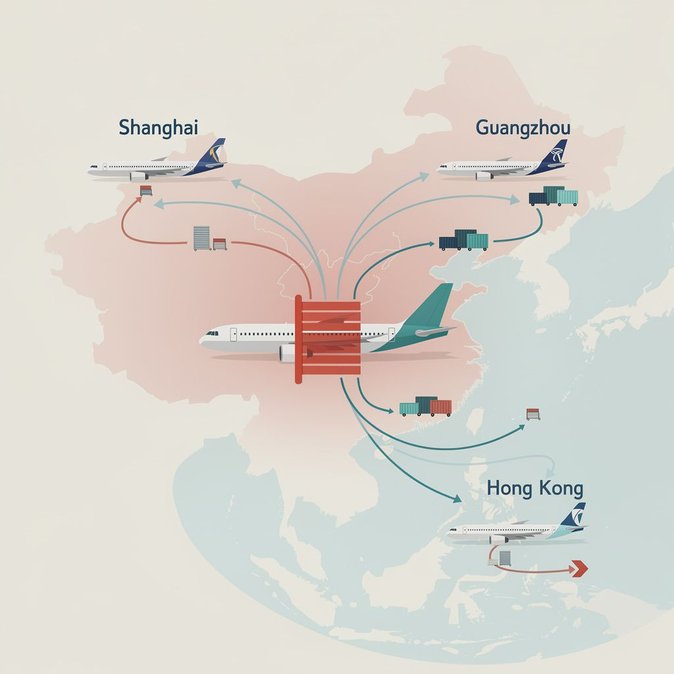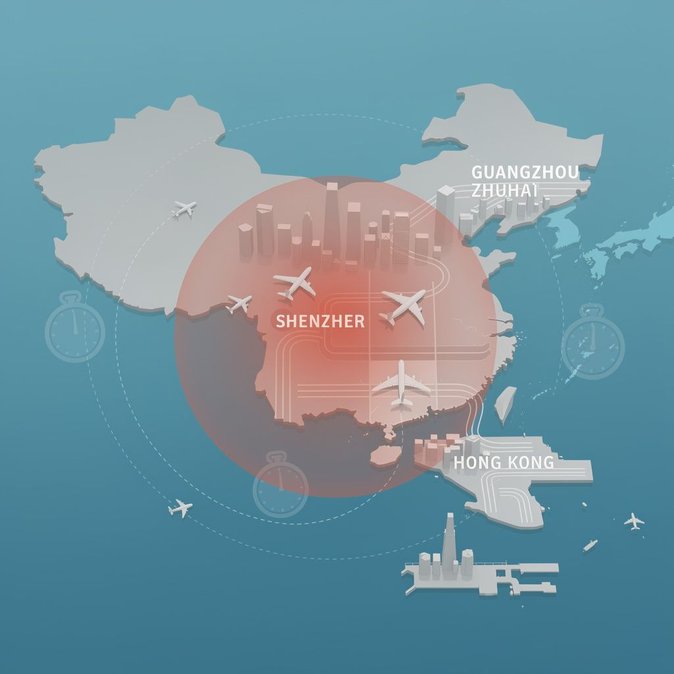
Business-jet and commercial operators flying into South China have been hit with extraordinary airspace and airport restrictions that stretch well beyond Shenzhen’s city limits. An operational bulletin posted by Jet Aviation on 18 November outlines that from 11 November through 22 November all take-offs and landings are banned at Guangzhou, Zhuhai, Foshan and Huizhou airports, while over-flights within a 200 km radius of Shenzhen are also prohibited. The notice specifically suspends flights between Hong Kong International Airport (HKG) and mainland destinations routed via Guangzhou airspace, forcing airlines either to cancel services or file lengthy detours. Shenzhen Bao’an itself is closed to any aircraft not connected with the APEC programme until 22 November, and Macau International Airport has rejected business-jet movements for the same period. Slots, parking stands and ground-handling resources that remain available are being prioritised for official delegations, and operators that make last-minute schedule changes risk losing previously approved permits altogether. The cascading effect is already visible: regional carriers report up to 25 percent of flights between Hong Kong and secondary mainland hubs have been cancelled this week, while charter brokers say demand for helicopter transfers between HKG and Western Pearl River Delta cities has spiked. Logistics analysts caution that the enforced re-routing is not just an aviation story—mail and express parcels that normally piggy-back on passenger holds are also being displaced. To navigate the disruption, Jet Aviation recommends operators verify slots at least 72 hours in advance, avoid schedule tinkering, and prepare contingency fuel plans for longer routings. Travellers connecting onward from Hong Kong should allow additional ground-transfer time or consider cross-boundary high-speed rail where available. The restrictions illustrate how China’s Civil Aviation Authority can mobilise a multi-airport security bubble around major diplomatic events—an operational reality that multinationals should bake into future travel risk assessments.
Source: Jet Aviation Operational Update