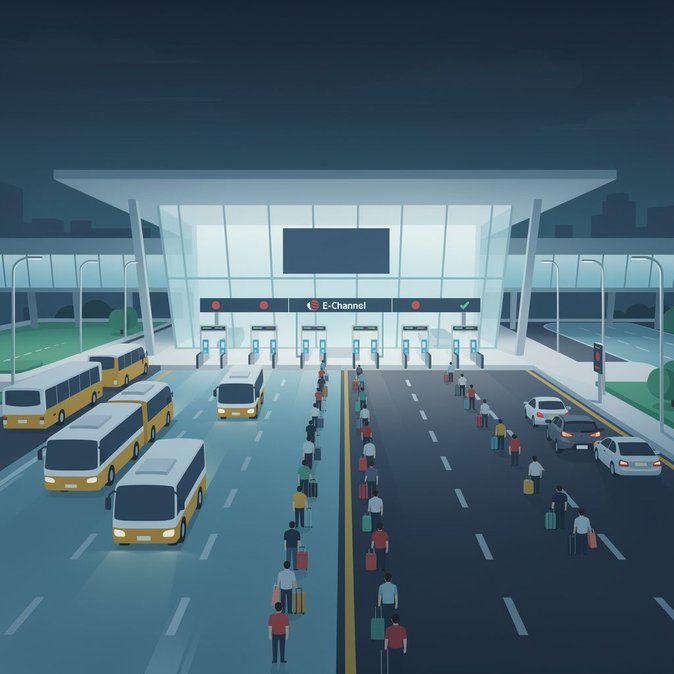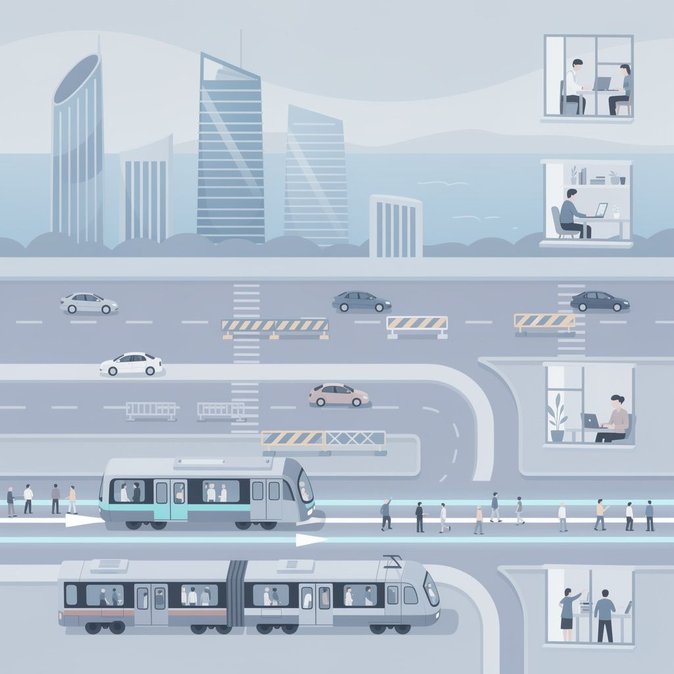
In addition to air and sea curbs, Shenzhen’s Public Security Bureau has rolled out a granular traffic-management plan for 18–19 November aimed at preventing gridlock around the APEC venues. An official policy explainer released via the bureau’s Weibo channel details rolling closures on nine key arteries—including sections of Shennan Avenue—during summit hours (16:00–22:00 on 18 November and 06:00–14:00 on 19 November). Diversion maps list alternative routes for each blocked junction, while selected bus lanes remain open to maintain limited surface transit. The city has also banned non-Guangdong-registered private cars (“non-Yue B” plates) from entering six central districts between 06:00 and 22:00 through 20 November, and dangerous-goods trucks are barred city-wide for the same period. To compensate, the Transport Bureau announced that all metro and public-bus fares are discounted 50 percent from 16–20 November, with last trains extended to midnight on core lines. The authorities say more than 1.8 million residents pre-registered to keep their vehicles off the road, resulting in noticeably lighter rush-hour traffic on 17 November. Navigation-app providers have been instructed to push real-time closure data, and a 24-hour hotline (0755-83333333) has been set up for queries. Corporations with offices in Futian CBD report switching to remote-work arrangements and staggering meeting times to avoid the heaviest lockdown windows. Hotel operators near the convention centre have arranged shuttle loops that skirt the restricted corridors, while ride-hailing platforms have re-priced peak hours to encourage mode shifts. Urban planners view the scheme as a live test of Shenzhen’s “digital twin” traffic-control platform, which combines licence-plate recognition, bus GPS feeds and metro turnstile data to regulate flows in near real time. The success—or failure—of this dynamic model will inform crowd-management playbooks for the 2027 Universiade and the 2031 Asian Games bids.