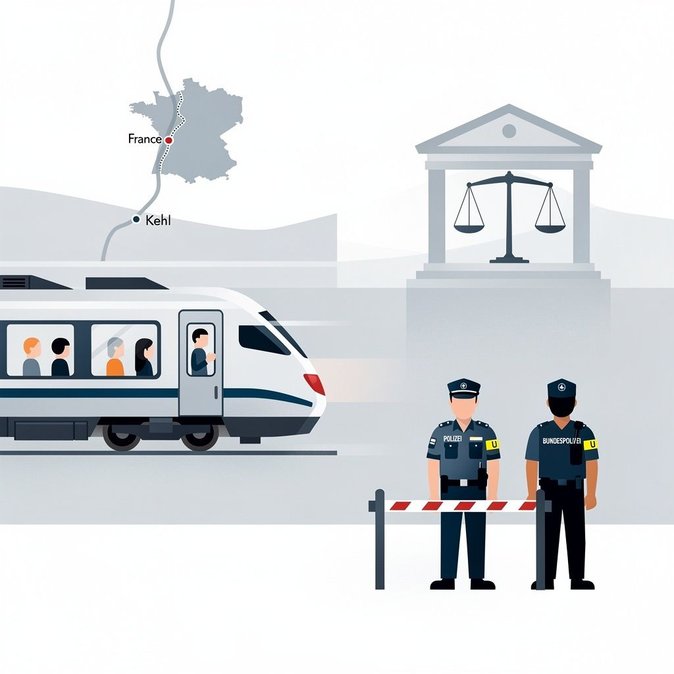
Germany’s Federal Police (Bundespolizei) highlighted the speed of its border-enforcement protocols today after an Algerian national caught without papers on a regional train from France was convicted and sentenced within 72 hours. The incident underscores the continued impact of Germany’s temporary internal Schengen border controls, which have been in place since September 2026. Officers stopped the 29-year-old on 15 November during spot checks at Kehl station on the Franco-German frontier. When the man resisted fingerprinting, force was used; prosecutors requested an accelerated procedure given the straightforward facts and the suspect’s lack of German residence. The Offenburg district court handed down a suspended sentence for attempted unlawful entry and assault on officers, enabling same-day deportation once the suspension conditions are met. The case is one of several published by regional police directorates today and illustrates how quickly mobility infringements can escalate into criminal matters under the tightened regime. Employers sending staff by train between Baden-Württemberg and Alsace should remind travellers to carry passports or national ID cards and valid residence permits if non-EU nationals. Random checks can occur on board or at station platforms even for routine commuter services. The Interior Ministry recently extended Germany’s internal border checks with France, Poland and the Czech Republic until at least 15 March 2027, citing ongoing smuggling pressure. While business travel remains possible, travellers should factor in potential delays and more intrusive questioning, particularly when carrying work tools or high-value electronics.