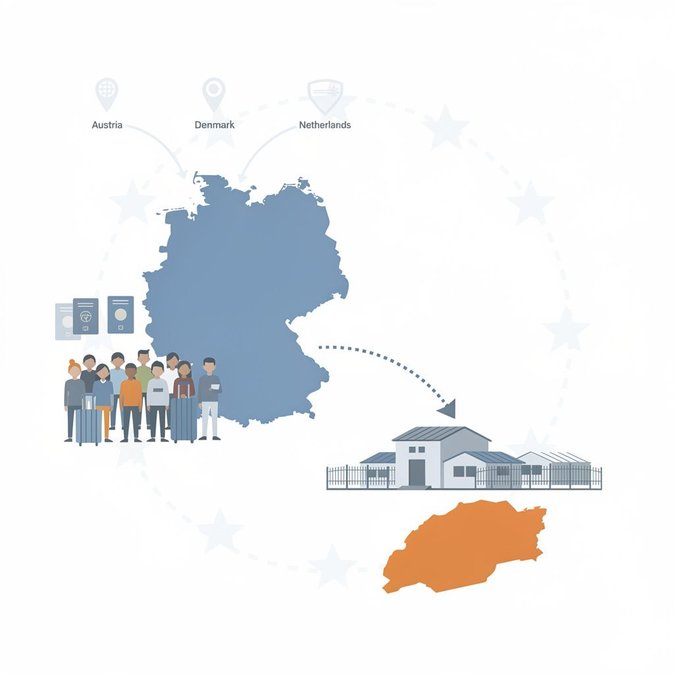
In less than a decade Germany has moved from Angela Merkel’s famous “Wir schaffen das” (“We can manage this”) welcome-culture mantra to a markedly tougher stance that now includes off-shoring parts of the asylum process. In Vienna on 17 November, Interior Minister Nancy Faeser stood alongside her Austrian, Dutch, Danish and Greek counterparts to unveil plans for a joint “return hub” in Rwanda for people whose asylum claims have been rejected in their countries. The project mirrors the United Kingdom’s aborted deportation deal and underscores a Europe-wide trend toward externalising migration control. According to the ministers, the hub will be financed jointly and administered under a memorandum of understanding with Kigali that is to be finalised “in the coming months.” Berlin says the scheme will initially target single adult males whose claims were rejected after fast-track procedures. Families and vulnerable groups are excluded for now, but NGOs fear a slippery slope. The German government argues that relocating failed applicants will speed up removals, deter irregular crossings and free administrative capacity for skilled-worker visas urgently needed by German industry. Domestically, the announcement marks a political watershed. Opinion polling shows a sharp rise in support for the far-right Alternative für Deutschland (AfD), particularly after knife attacks in 2024 and 2025. Chancellor Olaf Scholz’s “traffic-light” coalition has come under sustained pressure from conservative state governments to reduce arrivals and increase deportations. The Rwanda pact allows the interior ministry to demonstrate tangible action ahead of five state elections in 2027, even if only a few hundred people are transferred in a pilot phase. For corporate mobility managers the policy signals a harder line on humanitarian migration but is unlikely to affect regular work-visa processing. Nevertheless, companies should expect closer scrutiny of humanitarian leave-requests for dependants and a more demanding political environment whenever large layoffs raise questions about foreign labour. HR departments should proactively brief relocating staff on the public debate and reinforce corporate diversity policies to mitigate workplace tensions. Longer term the hub could set a precedent for other third-country arrangements, potentially fragmenting EU asylum practice. Firms moving staff across the bloc will need to monitor divergent national schemes that may create new compliance layers when planning postings or cross-border projects.
Source: Le Monde