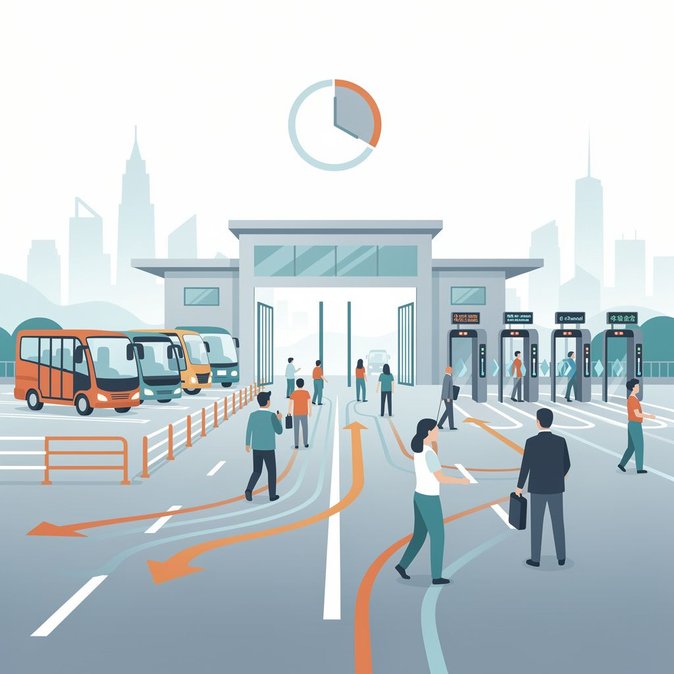
Open-data feeds published by Hong Kong’s Immigration Department at 11:33 a.m. on 18 November indicate green ‘Normal’ status—meaning wait times under 15 minutes for residents and under 30 minutes for visitors—at every one of the city’s land boundary control points, including the newly opened Huanggang and the Hong Kong–Zhuhai–Macao Bridge. The readings come despite heightened security and traffic diversions for the APEC summit taking place just across the border. The dataset, updated every four minutes and accessible via Data.gov.hk, shows aggregate weekday throughput running at roughly 95 percent of pre-pandemic 2019 levels. Mobility analysts attribute the smooth flow to staggered travel patterns, additional e-Channels and temporary public-transport lanes introduced since October. For multinational employers running day trips to Shenzhen factories or Macau client meetings, the figures suggest minimal impact on staff punctuality during the summit window. Immigration officials are promoting the “Easy Boundary” one-stop web platform and the HKeMobility mobile app so that passengers can check live queues before deciding whether to use Huanggang, Shenzhen Bay or Lok Ma Chau. Corporations with large commuter cohorts are embedding the JSON feed into internal travel dashboards to trigger real-time alerts when any checkpoint shifts to yellow (‘Busy’) or red (‘Very Busy’). While the snapshot is positive, companies are advised to keep contingency buffers. Passenger volumes typically spike after 9 p.m. when Hong Kong concerts end, and authorities may open pop-up holding areas for private cars at short notice. Travel managers should continue monitoring the feed through 20 November, when the APEC no-fly zone lifts and deferred leisure trips could flood the crossings.