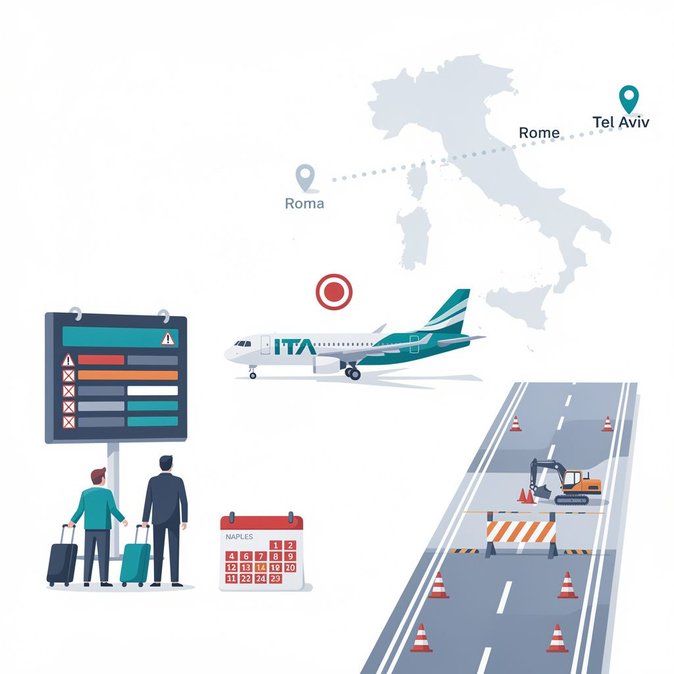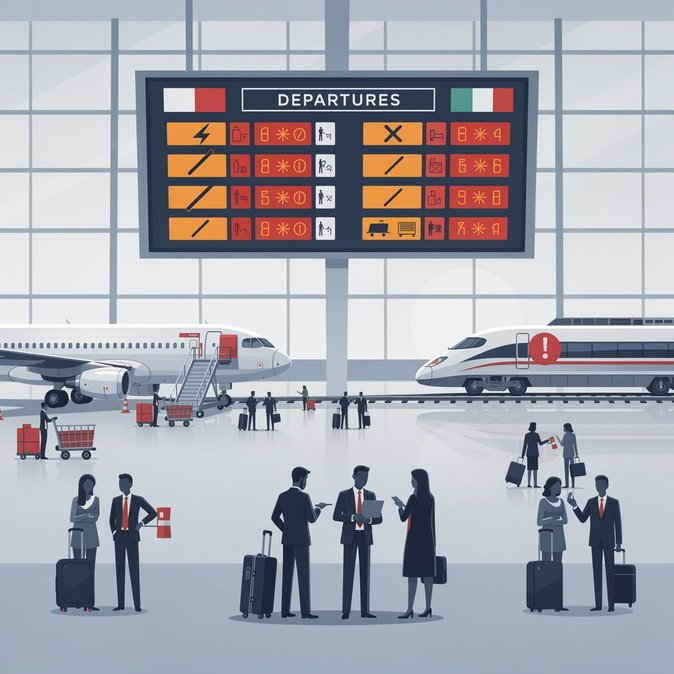
Italian air passengers face fresh disruption this weekend after the unions CUB Trasporti, SGB and other minor labour groups confirmed a four-hour national strike by flight-crew and ground-handling staff on Saturday, 21 November 2026, from 13:00 to 17:00. The walk-out is part of a broader protest against stalled contract negotiations and proposed changes to roster rules. It will involve workers at ITA Airways, several low-cost carriers and airport service companies. Although the stoppage is limited to four hours, experience from the last similar action on 30 September—when ITA Airways was forced to cancel almost 30 percent of its flights—suggests that knock-on effects could cascade well into the evening rush. Under Italy’s strike-mitigation law, airlines must protect a list of “guaranteed” connections, including at least one inter-continental service per hub and flights to the main islands, but all other services remain exposed to cancellation or long delays. Business travellers should therefore verify flight status 24 hours before departure, build contingency time into itineraries, and check whether their ticket qualifies for free rebooking under EU261. Where cancellations occur less than 14 days before travel, passengers are entitled to rerouting or a refund; compensation depends on the length of delay on arrival. Clients with meetings in Milan, Rome or Turin on Monday may want to consider rail alternatives if weekend positioning flights are cancelled. Airlines have begun issuing travel waivers. ITA Airways has published a list of guaranteed flights and advised passengers to arrive at the airport at least three hours before European departures. EasyJet and Ryanair have not yet announced their cancellation plans but are expected to do so 48 hours before the strike. International operators transiting through Italian airports should also plan for potential ground-handling slow-downs affecting tight connections. The protest coincides with a 24-hour nationwide rail stoppage that begins the previous evening, raising the risk of wider transport bottlenecks. Companies moving assignees or project teams in Italy over the weekend are advised to activate travel-tracking protocols and remind staff of alternative ground options, such as chauffeur services, where rail and air are simultaneously affected.