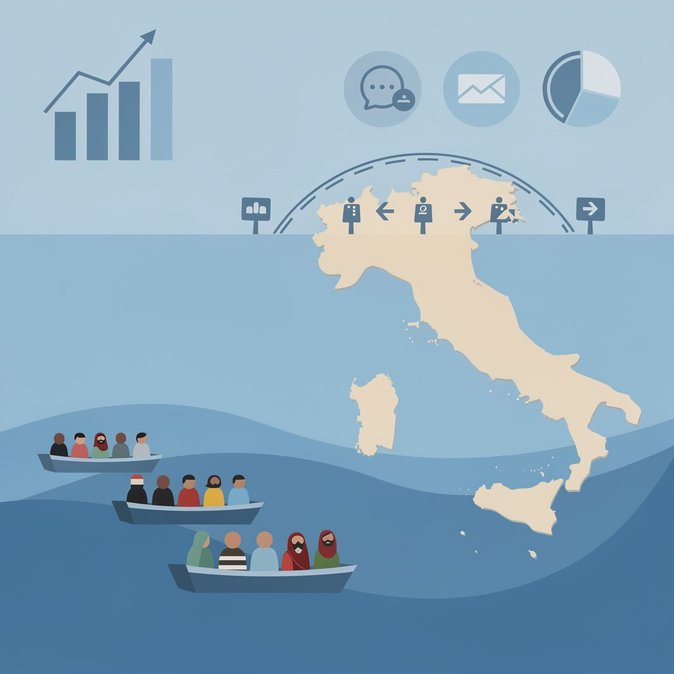
Italian labour inspectors and Carabinieri in Arezzo have broken up an immigration-for-profit network that used the identity of an unsuspecting Tuscan farm to file more than 100 fraudulent applications under Italy’s Decreto Flussi quota for non-EU workers. Investigators say eight intermediaries copied the company’s tax and registration data to submit job offers on the Interior Ministry’s online portal, charging would-be migrants up to €12,000 each in exchange for the promise of a work contract and a residence permit. According to the Carabinieri, the recruiting ring exploited the fact that the annual quota system can be accessed remotely with a SPID digital identity, making it difficult for authorities to verify in real time whether the employer actually exists. Because the fictitious contracts were never honoured, migrants would have entered Italy legally only to find themselves without work or accommodation—effectively falling into irregular status and at risk of labour exploitation. The bust highlights a longstanding vulnerability in the Decreto Flussi, which since 2023 has allocated 151,000 work permits a year but processes them on a first-come, first-served basis. Legitimate employers often complain that specialised “click-day” brokering services snap up quotas within minutes, while criminal facilitators use stolen credentials to inflate demand. The Arezzo case will feed into the Interior Ministry’s ongoing review of the digital platform ahead of the 2027 quota, with proposals ranging from two-factor authentication to a blockchain-based registry of job offers. For global-mobility managers the episode is a warning that background checks on Italian host entities are essential, especially when working with third-party recruiters. Companies planning to bring non-EU talent to Italy next year should monitor forthcoming technical guidelines and be ready for stricter proof-of-need requirements or in-person verification. Failure to adapt could mean missed quota windows—or worse, exposure to criminal liability if forged offers surface later in the immigration process.
Source: ANSA