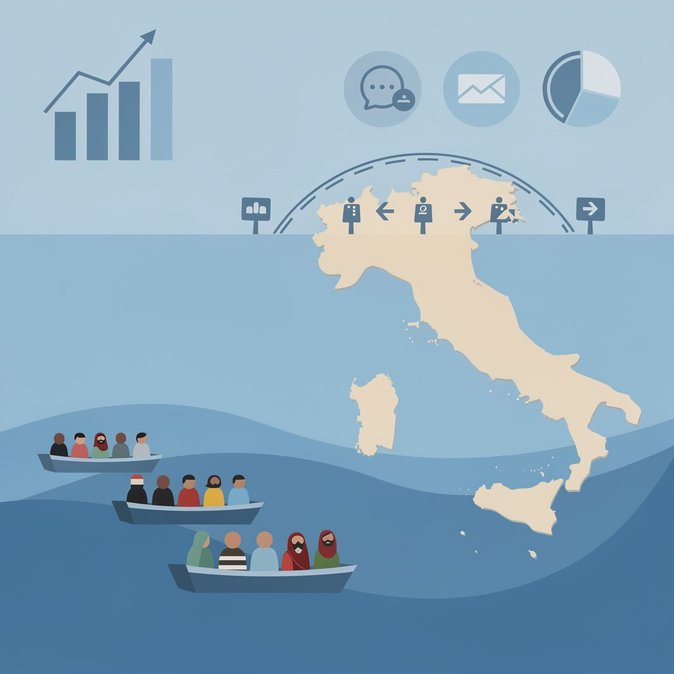
The second edition of the ‘Stati Generali dell’Immigrazione’, held on 13–14 November at the University of Naples Federico II and the Sant’Egidio community, released its conclusions on 18 November. Organised by the CoNNGI network of second-generation Italians together with OIM and government ministries, the forum called for decoupling residence registration from ‘suitable housing’ requirements, expanding social-housing stock and piloting Spanish-style regularisation pathways (arraigo) for long-term irregular workers. Labour-market data presented show 5.6 million foreign residents in Italy, of whom 2.6 million are employed—but 35.2 per cent of all-migrant households live in absolute poverty. Academics argued that complex permit-renewal rules and inconsistent recognition of foreign qualifications perpetuate precarity. Suggestions included extending the ALT-Caporalato anti-exploitation model nationwide and granting automatic permit renewals during labour inspections to protect whistle-blowers. On education, participants urged the Education Ministry to make Italian-language support a structural budget item and to train teachers in intercultural competences. A University of Naples study found 26 mother tongues among 172 immigrant pupils, illustrating the need for multilingual pedagogy. For companies the take-away is simple: immigration and welfare debates in Italy are moving beyond border control to structural inclusion. HR teams looking to hire foreign talent should monitor whether pilot schemes on rental guarantees or fast-track regularisation are adopted in 2027, potentially easing compliance costs in high-turnover sectors such as construction and caregiving.
Source: Integrazione Migranti