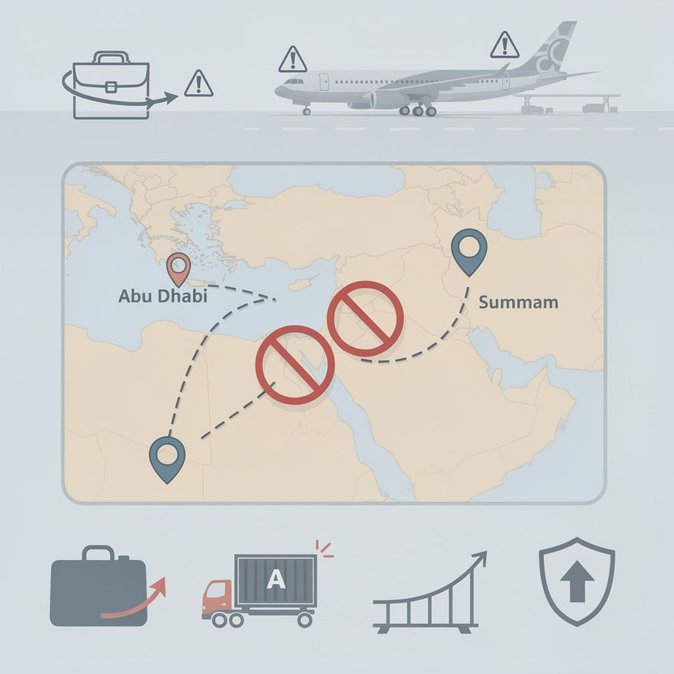
Etihad Airways has pushed back the restart of its Abu Dhabi–Riyadh and Abu Dhabi–Dammam services for a further 11 days, citing continuing security risks linked to drone and missile attacks on Saudi infrastructure and air-routes. In an advisory dated 19 November, the airline said all passenger and cargo operations on the two routes will now remain suspended until at least Monday, 30 November 2026. Flights to Jeddah and Medina are operating as scheduled, but Etihad warns the situation is ‘highly dynamic’ and subject to change at short notice. Customers booked on the affected services can rebook on alternative dates or claim a full refund. The UAE flag-carrier’s decision comes as a widening group of foreign airlines rethink exposure to Saudi airspace. According to aviation-intelligence site The Flight Brief, Lufthansa Group has blocked Riyadh and Dammam flights until 7 January 2027, KLM until 27 December 2026, and Cathay Pacific has cancelled both Dubai–Riyadh and Dubai–Hong Kong services through 31 January 2027. For multinational companies routing staff through the Gulf, the rolling extensions complicate holiday-season travel planning and cargo timelines. Travel managers are being advised to double-check bookings 24 hours before departure and to keep a close eye on airline waivers, which in most cases allow free date changes for tickets issued before 10 November and travel before 30 November. If security conditions do not improve, analysts warn that costs could rise as carriers operate longer routings around conflict zones, while insurers may raise war-risk premiums for flights that do go ahead. Companies with time-critical assignments in Saudi Arabia are therefore increasingly funnelling travellers through Doha or Manama, where flight schedules have so far proved more resilient.
Source: The Flight Brief