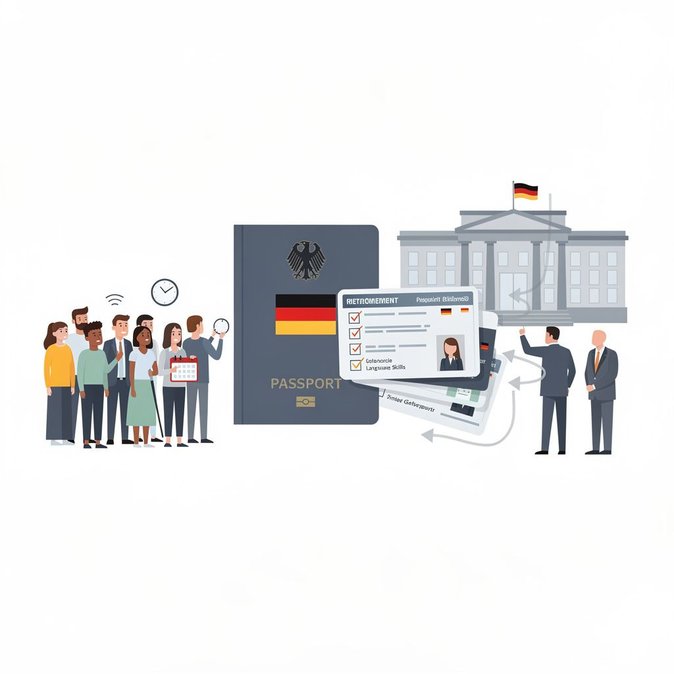
At a round-table hosted by Frankfurt’s Chamber of Commerce and Industry (IHK) on 17 November, regional authorities unveiled a major restructuring of Germany’s ‘fast-track’ skilled-worker visa. Since 1 October, the newly created Central Office for Skilled Migration Hesse (ZFEH) has coordinated accelerated procedures for companies in Frankfurt; from 1 December the mandate expands statewide. The ZFEH, housed within the Darmstadt Regional Council, aims to shorten processing times by bundling all pre-approval steps—labour-market checks, recognition of qualifications and residence-title issuance—under one roof. According to IHK President Ulrich Caspar, 60 percent of firms in the latest DIHK apprenticeship survey cited visa bureaucracy as their top recruitment hurdle. By giving employers a single digital dashboard and named case officers, the ZFEH hopes to cut average handling times from 12 weeks to eight. The Frankfurt Immigration Office will remain the front-end contact for local companies but will forward complete files electronically to the ZFEH. Practically, HR teams should update power-of-attorney templates to reflect the new authority and ensure that employment contracts list Hesse as primary workplace—an eligibility requirement for the fast-track lane. Employers will also need to pay a €411 “acceleration fee” upfront, but Caspar hinted that refunds could be offered if statutory deadlines are missed. The reform aligns with Germany’s federal Skilled-Immigration Act overhaul, which shifted more responsibility to Länder-level ‘central talent units.’ Observers expect other states to mirror Hesse’s model if KPIs show faster approval rates by mid-2027. For now, companies recruiting engineers, IT specialists or nurses into Frankfurt should set internal start-date expectations for Q2-2027 as the system beds in.
Source: IHK Frankfurt am Main