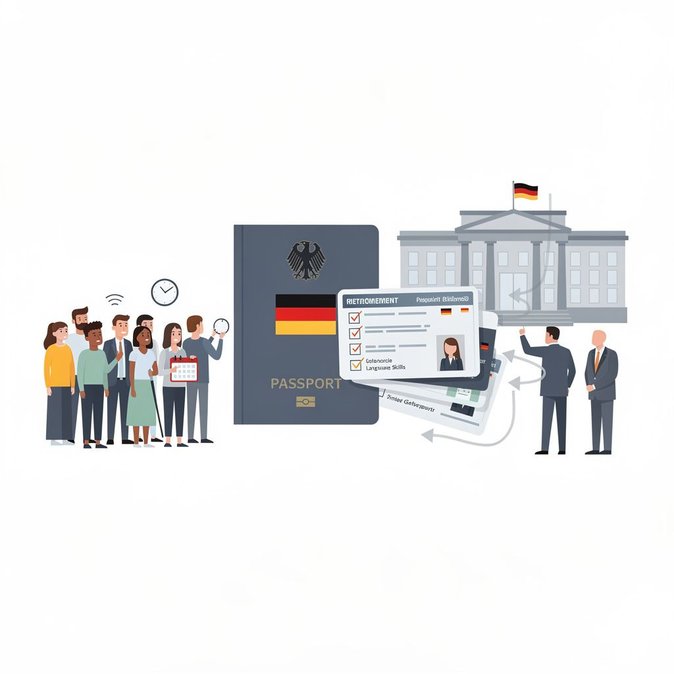
Germany’s conservative bloc is again seeking to roll back the 2024 liberalisation of the Nationality Act. A policy paper leaked to Bild and confirmed by CDU sources on 19 November proposes reinstating the pre-2024 eight-year residence rule, limiting dual citizenship to ‘exceptional cases,’ raising the language bar to B2 level, and introducing a blanket ban on naturalisation for anyone receiving social assistance. The proposal, drafted by CDU MPs Günter Krings and Alexander Throm, could be tabled in the Bundestag as early as next week. The move puts pressure on coalition partner SPD, which championed the five-year rule and unrestricted dual citizenship during the previous “traffic-light” government. While the current coalition agreement preserves those reforms, conservatives are signalling willingness to trade stricter citizenship rules for concessions on work-based residence permits. Political analysts expect intense inter-party negotiations, as the SPD is cautious not to alienate voters who benefited from the 2024 reform. For foreign employees and long-term assignees, the uncertainty complicates planning. HR departments should advise staff approaching the five-year threshold to file applications promptly in case transitional arrangements are not grandfathered. Companies with globally mobile talent pipelines may also need to recalibrate projections for retaining key workers if dual citizenship becomes harder to obtain, affecting assignment costs and retention strategies. Even if the bill fails, the public debate itself may shape local authority practice. Past experience shows that some Bürgerämter slow-walk applications ahead of possible rule changes, so mobility teams should track processing times closely and escalate delays through legal counsel where necessary.
Source: The Local Germany