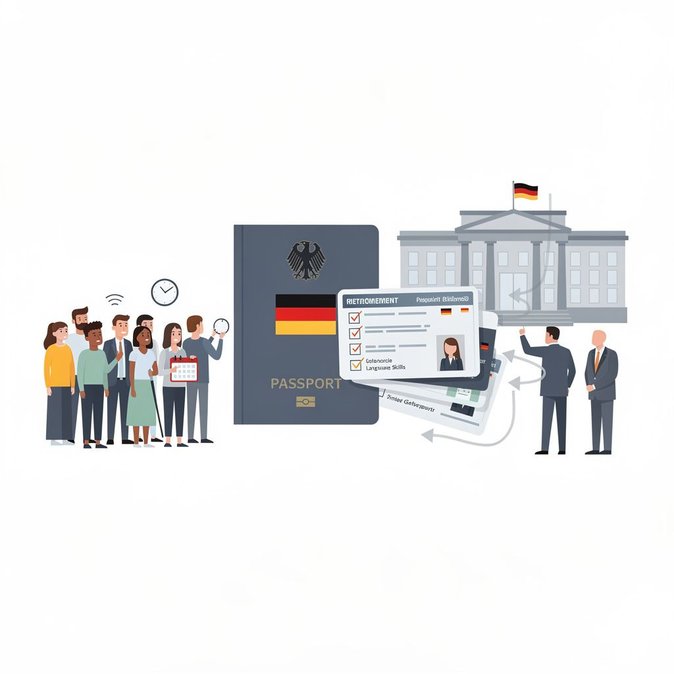
A decision by Germany’s interior ministry to shelve plans for a single ‘Work-and-Stay Agency’ and leave responsibility for residence permits with the country’s 550 local Ausländerbehörden has triggered a backlash from business groups. Reporting by Wochentlich on 19 November 2026 quotes the Confederation of German Employers (BDA) as saying the move “locks in a patchwork that slows the recruitment of badly-needed skilled workers.” The coalition had floated a central digital agency to handle Blue Card and Skilled Immigration Act cases end-to-end. But Interior Minister Alexander Dobrindt (CSU) argued that Länder sovereignty and data-protection hurdles made consolidation unrealistic in this legislative period. Instead, the forthcoming portal will merely forward applications to the local office in the worker’s intended place of residence. Employers warn the compromise will perpetuate unequal processing times – from three weeks in Düsseldorf to six months in Berlin – undermining Germany’s attractiveness compared with France or the Netherlands, which already operate more centralised business-immigration systems. Staffing suppliers add that, unless they gain portal access, onboarding timelines will remain opaque, making it harder to predict project start-dates. For corporate HR and mobility teams the message is clear: factor local variance into assignment planning for 2027. Companies with multiple sites should map the slowest jurisdictions and consider ‘virtual seats’ or phased deployment until permits are issued. Immigration advisers recommend filing applications as soon as contracts are signed and using the accelerated §81a fast-track where available, even though capacity is capped. The ministry says it will publish a progress report by mid-2027. If processing times do not converge, business lobbyists are expected to renew calls for federal takeover, citing Germany’s widening skills gap – forecast at 400,000 vacancies a year – and the risk that talent will choose other EU destinations.
Source: Wöchentlich