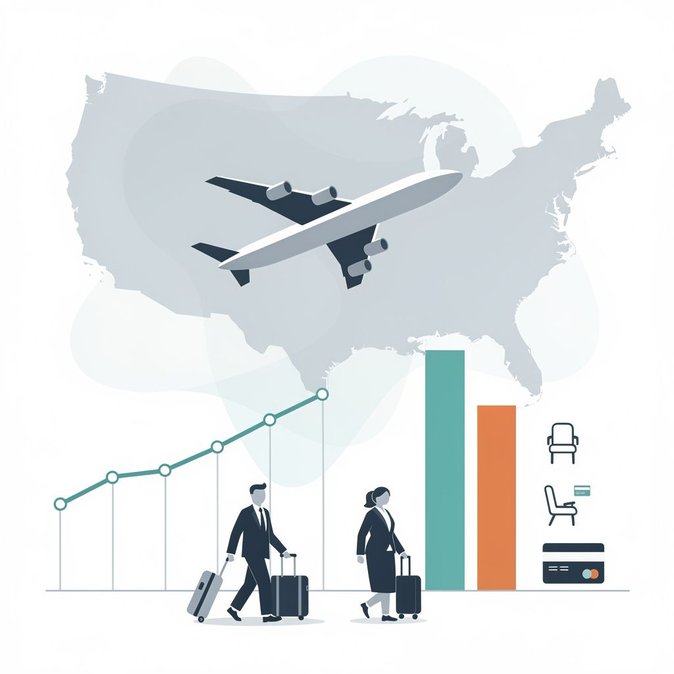
American Express Global Business Travel’s newly released Air Monitor 2027 projects that average corporate airfares on key U.S. routes will rise between 2% and 4% next year—still an uptick but well below the double-digit jumps seen in 2025-26. The report, published on 19 November, cites cooling jet-fuel prices, steady but unspectacular demand, and airline capacity growth—especially premium-cabin seats—as moderating forces. On transatlantic business-class itineraries, fares could climb 4.3% as carriers add new A321XLR narrow-body services. North America-Asia business-class tickets may rise 4.5%, with Amex GBT flagging tight bilateral caps on China-U.S. flights that divert traffic through Seoul and Tokyo. Domestically, fare inflation is projected in the low single digits as low-cost entrants expand into secondary markets. The consultancy warns, however, that headline fares mask rising ancillary costs. Checked-bag, seat-selection and carbon-offset fees are growing faster than base prices, complicating travel-budget forecasting. Travel buyers are urged to benchmark total trip cost and leverage data analytics to negotiate bundled deals. For global-mobility teams, the findings mean 2027 budgets should assume modest airfare escalation but allocate extra funds for premium-economy upgrades and flexibility options that keep relocating staff productive. Companies moving talent between the U.S. and Europe may wish to lock in advance-purchase blocks before January when airlines traditionally reset corporate rate sheets. The report also dovetails with hotel and meetings forecasts that point to broader cost pressure across the travel program, reinforcing the need for integrated sourcing strategies.
Source: Business Travel Executive