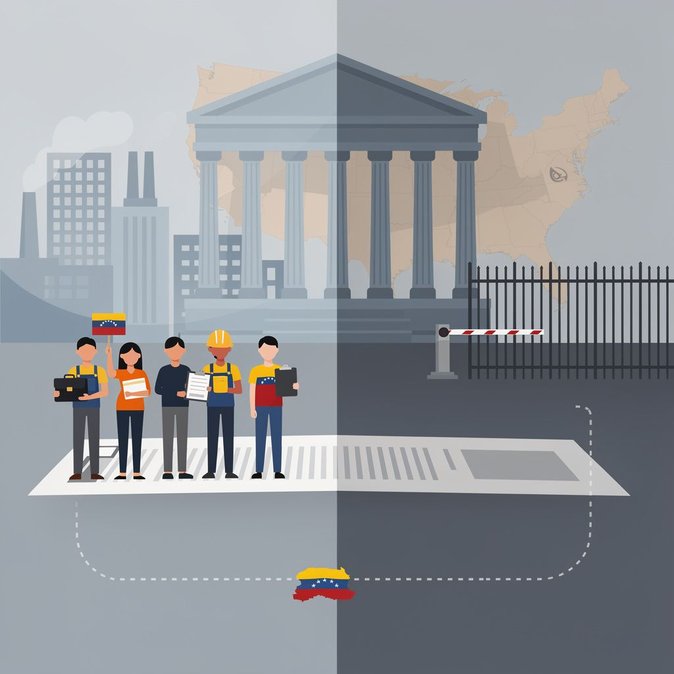
Hundreds of thousands of Venezuelan nationals who have built lives and careers in the United States awoke on 19 November to fresh uncertainty after the Ninth Circuit agreed to keep a lower-court ruling restoring Temporary Protected Status (TPS) on ice. The decision came only hours after the Department of Justice filed an emergency application asking the U.S. Supreme Court to block the lower-court order indefinitely. TPS gives beneficiaries work authorisation and protection from deportation when conditions in their home country are deemed unsafe. In 2021 the Biden administration extended TPS to Venezuelans citing economic collapse and political repression. President Trump cancelled the program shortly after returning to office in 2025, triggering multiple lawsuits. A California district judge ruled last month that the termination violated administrative-law requirements, but stayed her own order for seven days to allow the government to appeal. The government argues Venezuela no longer meets the statutory criteria for TPS and that letting the ruling take effect would undermine immigration enforcement and force U.S. agencies to issue work permits. Plaintiffs counter that a sudden withdrawal would separate families and disrupt U.S. employers that have hired tens of thousands of TPS holders, many in construction, hospitality and health care—sectors already facing labour shortages. If the Supreme Court declines to intervene, U.S. Immigration and Customs Enforcement would have to lift more than 1,800 active detention orders as early as 22 November. Human-resources teams are preparing contingency plans in case employees lose work authorisation on short notice. Immigration counsel recommend renewing Employment Authorization Documents at the first opportunity and planning international travel conservatively until legal clarity emerges. For global-mobility managers the case underscores the fragility of humanitarian visa categories. Companies with large Venezuelan workforces should inventory affected employees, review I-9 reverification timelines, and draft communications to reassure talent while litigation continues.
Source: Associated Press