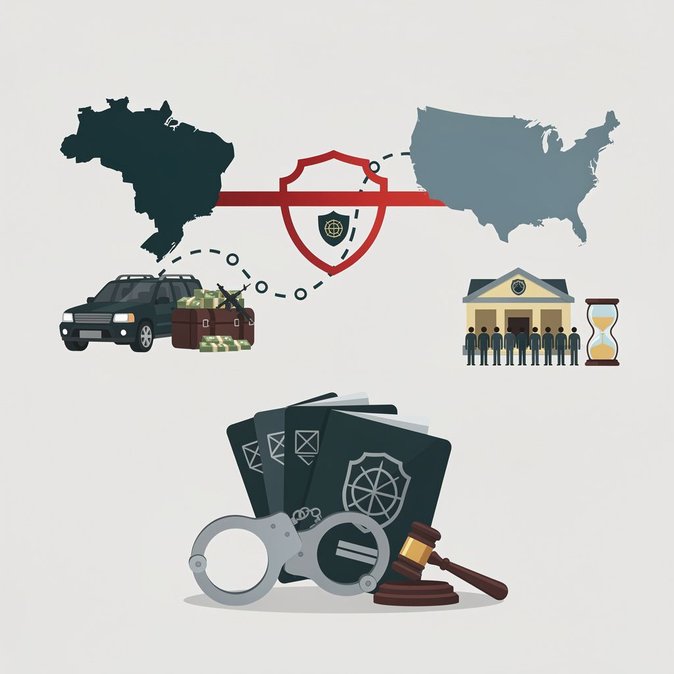
The Federal Police (PF) have executed the third phase of Operation Yankee, raiding homes in Ji-Paraná (Rondônia) and Guarulhos (São Paulo) linked to a network that allegedly charged Brazilians hefty sums to cross the U.S. border illegally. Officers seized R$ 45,000 in cash, two firearms—one unregistered—and several vehicles; one suspect was arrested in flagrante delicto. Investigators say the organisation offered end-to-end logistics: forged documents, visas for Central American transit points, guides for the Darién Gap and “coyotes” for the Mexico–U.S. leg. Money was laundered through small trucking companies and currency-exchange houses. The PF is now analysing seized phones to map routes and identify U.S.-based collaborators. For U.S. and Brazilian authorities the bust illustrates how Brazil’s north-west states have become staging grounds for “pipeline” migration to North America. Companies with large workforces in Rondônia or Acre should expect tighter scrutiny of passport applications and possible delays in legitimate travel as consular posts cross-check for fraud. Employers should also warn staff that facilitation of irregular migration is a crime carrying up to eight years in prison under Brazil’s Migration Law. The PF promises more raids in coming weeks; the case may also feed into Washington’s ongoing negotiations with Brasília over joint efforts to disrupt human-smuggling finances. The operation reinforces a regional trend: earlier this month Ecuadorian police dismantled a similar ring moving South Americans through Panama. Multinationals should therefore review compliance programmes to ensure corporate resources—such as fleet vehicles—are not repurposed by organised crime.
Source: ac24horas