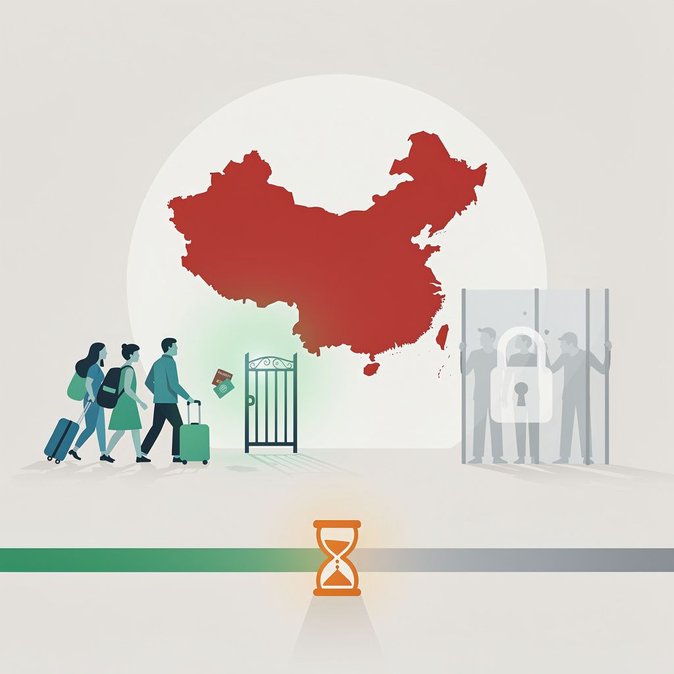
Travellers from 48 mostly European and Anglophone nations face renewed uncertainty after China’s Foreign Ministry said on 17 November that it is “seriously studying” but has not yet decided on an extension of the unilateral 30-day visa-free policy that expires on 31 December 2026. Independent tracker Yuloy Travel verified on 19 November that no new notice had appeared on either the ministry or National Immigration Administration websites. The policy—first rolled out for five European countries in 2023 and repeatedly expanded—has become a cornerstone for short-term business visits and trade-fair attendance. HR teams had hoped the APEC summit would bring clarity, but officials deferred the issue. If no extension is issued, executives from countries such as Germany, France, the United Kingdom, Canada and Australia will need standard visas for trips commencing in 2027, adding lead time and cost. Multi-entry visas can take two to four weeks to secure, and appointments at some consulates are already fully booked for January. Companies with projects spanning year-end 2026 should now map out contingencies: advancing travel into December, shifting meetings offshore, or budgeting for rush-visa services. Mobility lawyers also remind travellers that entering on 30 December 2026 does not guarantee a legal stay into February unless the rules are formally rolled over. China has shown willingness to make targeted renewals—the Russia exemption now runs to end-2027—so an across-the-board lapse remains unlikely. Nonetheless, the absence of certainty is forcing risk-averse corporates to act as though visas will once again be mandatory.
Source: Yuloy Travel