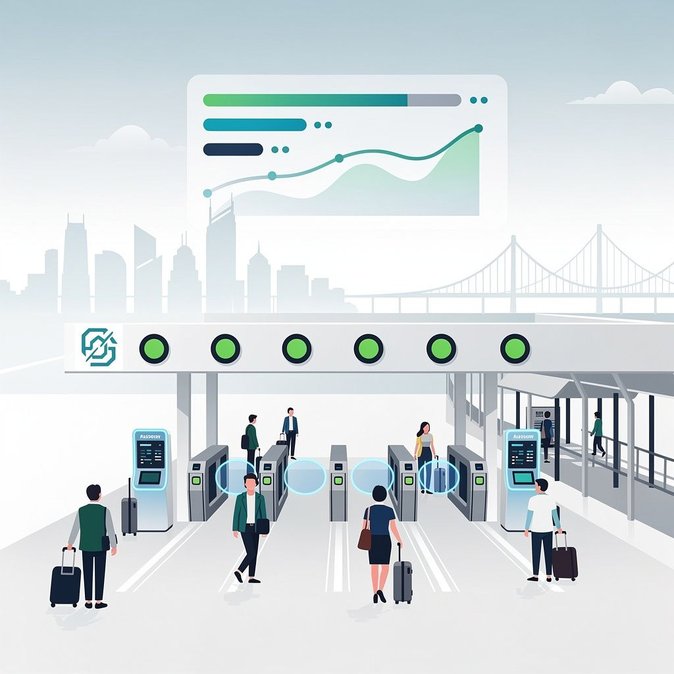
Live data from the Immigration Department’s open-data interface showed that all seven road and rail checkpoints between Hong Kong and the Chinese mainland were displaying a green “Normal” status (under 15-minute queues for residents and under 30 minutes for visitors) at every 15-minute update on 20 November. The snapshot covered the Lok Ma Chau Spur Line, Lo Wu, Lok Ma Chau Huanggang bridge, Shenzhen Bay, Hong Kong–Zhuhai–Macao Bridge, Man Kam To and Sha Tau Kok. The smooth flows came despite the tail-end of the Asia-Pacific Economic Cooperation (APEC) Leaders’ Week being held just across the border in Shenzhen. Over the previous three days Hong Kong’s Immigration Department, Customs and Police had activated crowd-management plans and warned of peak traffic as some 10,000 delegates and support staff transited the city en route to Shenzhen hotels. Officials attributed the steady throughput to “dynamic lane balancing”, real-time signage on the “Easy Boundary” mobile platform and the redeveloped Huanggang Port’s new ‘joint inspection, one-time release’ halls, which quadruple processing capacity compared with the legacy facility. A trial allowing pre-registered APEC Business Travel Card holders to use contactless e-Channels at land ports also helped thin queues. For corporate mobility managers the message is clear: even during mega-events the cross-border commute can be predictable if travellers enrol in e-Channel programmes, carry QR codes for China’s health declaration and avoid the 7–9 a.m. and 6–8 p.m. peaks. Logistics firms told Global Mobility News that trucking times through Shenzhen Bay were “within normal contractual service levels” all day. Looking ahead, the Immigration Department will keep publishing 15-minute queue-time feeds; companies moving talent into the Greater Bay Area are urged to integrate the API into their travel dashboards so that employees can choose the fastest crossing in real time.