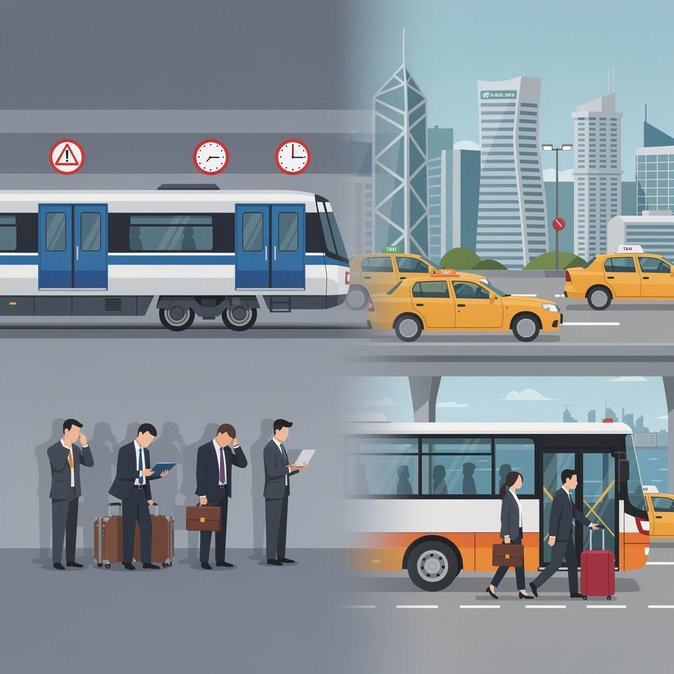
Hong Kong’s Transport and Logistics Bureau has ordered the MTR Corporation to submit a detailed improvement plan after signalling failures at HKU Station on 18 and 19 November caused back-to-back rush-hour disruptions on the Island Line. Thursday’s fault started at 07:43 and normal service did not fully resume until 08:38, forcing trains to run at reduced speed and lengthening intervals to six minutes. Although the incident is domestic, it matters to the global-mobility community because the Island Line links key expatriate residential districts such as Mid-Levels and Quarry Bay with the Central business district, where many multinational headquarters are located. Dozens of business travellers arriving on overnight long-haul flights missed early-morning meetings, according to corporate-travel management firm BCD. The Electrical and Mechanical Services Department (EMSD) dispatched engineers for an on-site investigation and demanded that MTR identify whether the two faults share a root cause. The railway operator says preliminary data point to an “intermittent signal-cable anomaly” and has pledged to accelerate a planned HK$650-million upgrade of the 40-year-old Island Line signalling system. For mobility and relocation managers the episode is a reminder to build redundancy into ground-transport policies: ride-hailing platforms were surge-pricing above 2.5× during the outage, while the Star Ferry maintained five-minute headways unaffected. Companies may wish to subsidise ferry or tram alternatives on disruption days. MTR has committed to publish real-time fault alerts via its app and open data feed by early 2027. Until then organisations should integrate the EMSD railway fault RSS feed into their traveller-tracking dashboards to ensure duty-of-care messages reach staff in time.
Source: South China Morning Post