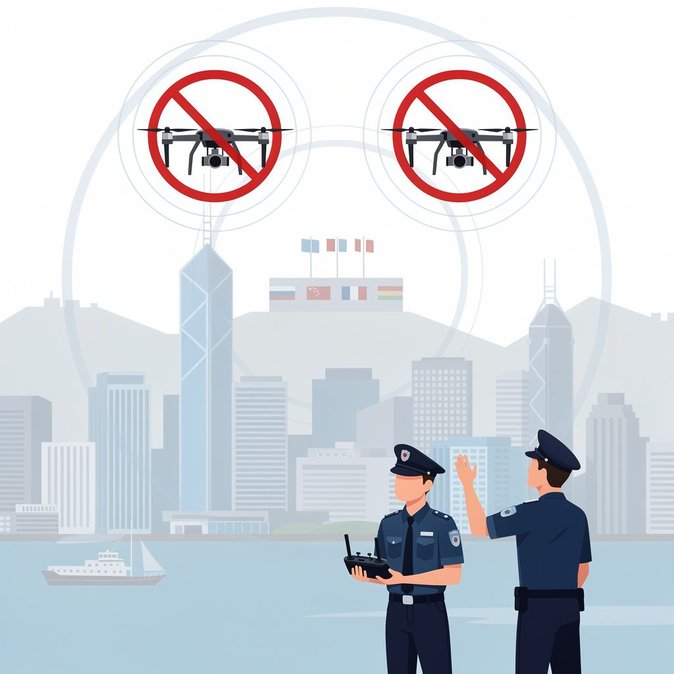
Hong Kong police arrested two men, aged 27 and 65, on 19 November for flying small unmanned aircraft inside a temporary restricted-flying zone that blankets the northern New Territories during this week’s APEC leaders’ summit in neighbouring Shenzhen. Officers seized two consumer-grade drones in separate morning operations in Sheung Shui and Fanling after radar alerts indicated unauthorised activity. The Civil Aviation Department imposed the territory-wide ban on drones, paragliders, captive balloons and most light aircraft from 00:00 on 17 November until 23:59 on 20 November to secure flight paths used by heads of state and to guard against low-level threats. Only Government Flying Service aircraft are exempt. Violating the Small Unmanned Aircraft Order carries a maximum penalty of HK$100,000 (US$12,800) and two years’ imprisonment. The clamp-down has forced surveyors, real-estate photographers and construction firms to ground routine aerial-mapping operations for four days, prompting calls for clearer contingency guidelines ahead of future mega-events. Logistics companies have also had to reroute cross-border drone delivery trials scheduled for this week. Police said more patrols and mobile signal-tracking units have been deployed near border villages and known recreational-flying sites. Since the start of the restriction, at least four arrests have been made, underscoring Hong Kong’s zero-tolerance stance on air-security breaches. Industry associations urge commercial operators to ensure remote-ID firmware is up to date and to subscribe to real-time NOTAM alerts as the city prepares to license beyond-visual-line-of-sight flights in 2027. For business travellers, the episode is a reminder that Hong Kong’s airspace rules can tighten rapidly around regional events. Companies planning drone-based inspections or marketing shoots should build flexible timelines and consider insurance riders covering government-ordered stand-downs.