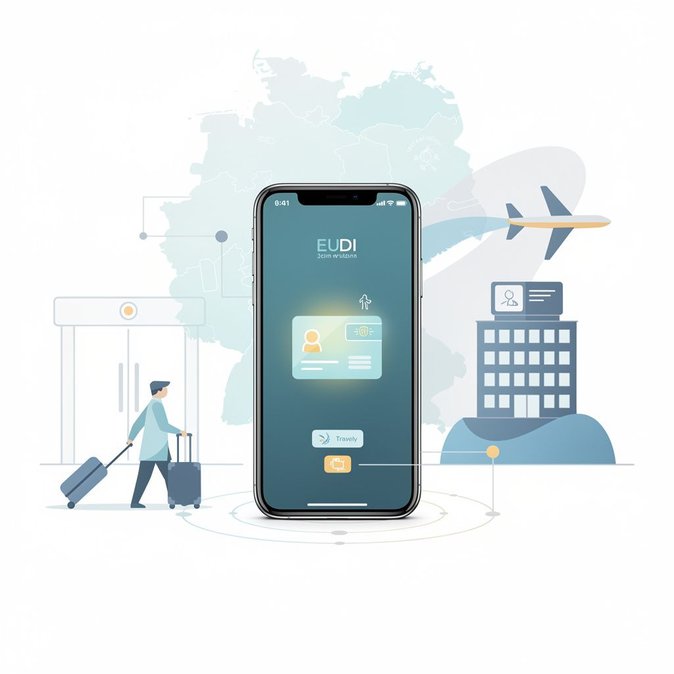
Germany’s upper house of parliament, the Bundesrat, cleared the last legislative hurdle for the Digitale Identitätengesetz (Digital Identities Act) in its 20 November 2026 plenary session. The vote formally approves nationwide roll-out of the European Digital Identity (EUDI) wallet – branded “d-you” – which will allow citizens and residents to store their passport, national ID, visa stickers and driving licence on their phones. The government expects the first wallets to be issued in January 2027, after pilot trials with Lufthansa, Deutsche Bahn and several hotel chains. Under the new law, travellers will be able to check into hotels or board domestic flights by presenting a QR code instead of a physical passport. Border-control officers, airlines and visa-application centres will scan the code to retrieve encrypted identity data in real time. According to the Digital Affairs Ministry, the wallet complies with EU eIDAS 2.0 standards and supports pseudonym functions designed to curb data harvesting by private service providers. For corporate mobility teams the wallet promises faster visa filing because employees can pre-load biometric data, residence permits and travel history, eliminating repeated submission of notarised copies. Early adopters Lufthansa and the Federal Foreign Office plan to integrate the wallet into Germany’s upcoming online national-visa portal, reducing walk-in appointments for D-visas by up to 30 percent. Privacy groups had lobbied for stronger safeguards; the final text obliges providers to store personal keys only on the user’s device and to offer an “offline” verification mode for cases of network outage. The Bundesrat also added a review clause: by mid-2028 the government must report on uptake and cross-border interoperability with other EU wallets such as France’s “FR-ID” and Denmark’s “MitID”. Practically, HR departments should budget time to update travel-policy language and duty-of-care checklists. International assignees will still need to carry physical passports on long-haul trips until airlines worldwide recognise the EUDI scheme, but for intra-Schengen segments Germany expects full acceptance before the UEFA Euro 2028 tournament.
Source: Bundesregierung