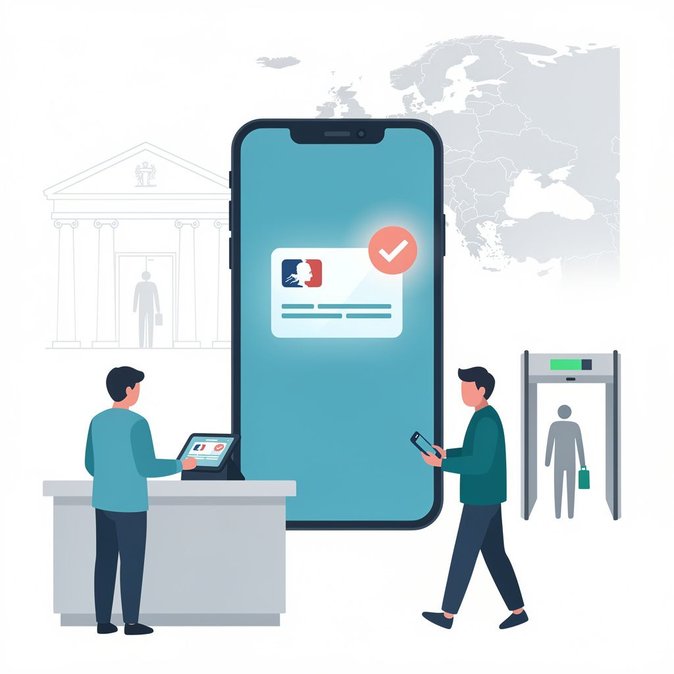
The City of Paris quietly updated its public-service portal on 20 November to spell out how residents can create – and, crucially, certify – a digital version of their national ID card using the France Identité mobile application. Certification, which involves a quick in-person scan of a QR code at selected municipal offices, upgrades the basic digital ID into a state-backed credential accepted for more than 1,800 online services and for identity checks at airports participating in France’s biometric “PARAFE” programme. Under the refreshed guidance, any Paris-based adult who holds the new credit-card-sized CNIe (Carte Nationale d’Identité électronique) and an NFC-enabled smartphone running at least Android 11 or iOS 16 can book a same-day walk-in certification. The process is free and takes less than five minutes; certification is then valid for five years. Travellers are advised to update the app before arriving at the airport to avoid delays at self-service bag-drop or e-gate enrolment kiosks. The update is significant for frequent flyers and cross-border commuters, as the Interior Ministry is gradually linking France Identité to the upcoming EU Digital Identity (EUDI) wallet and to automated Entry/Exit System (EES) gates. Air France and Aéroports de Paris have confirmed that certified digital IDs can already substitute for paper ID at select domestic bag-drop points, with international trials planned at Orly and Roissy-Charles-de-Gaulle in early 2027. Beyond travel, certification unlocks advanced use cases such as remote notarisation, social-security enrolment and the soon-to-launch fully digital French driving licence. Companies relocating staff to France should encourage employees to obtain the certified ID, as it streamlines many administrative steps, from opening a bank account to registering with health insurance. For expatriates and globally mobile staff, the message is clear: the French administration is moving rapidly toward “mobile‐first” identity management. Early adoption will help travellers navigate upcoming biometric border reforms and avoid paper-based bottlenecks.
Source: Ville de Paris