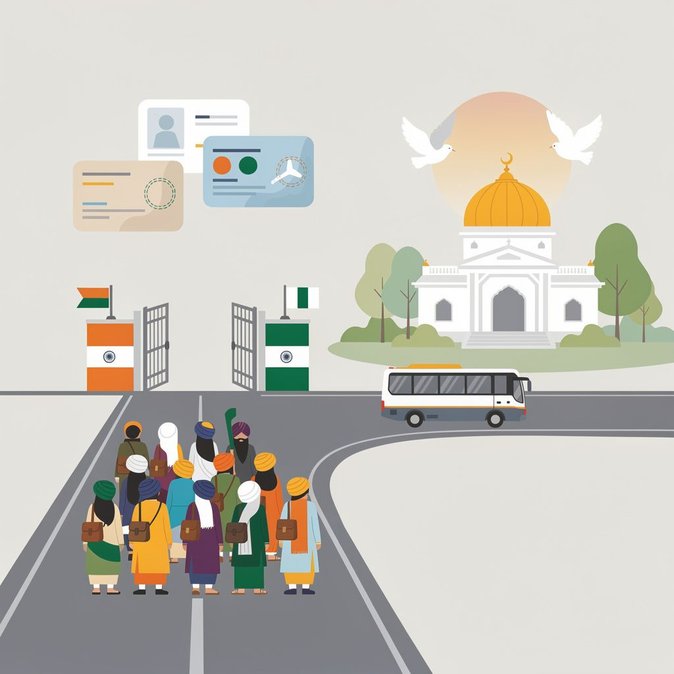
The Shiromani Gurdwara Parbandhak Committee (SGPC) confirmed on 21 November that Pakistani High Commission officials have approved visas for 1,822 Indian pilgrims travelling to Nankana Sahib and other historic shrines from 22 November to 1 December. The jatha will cross the Attari-Wagah land border, underscoring the continued functioning of bilateral religious-pilgrimage protocols despite political tensions between New Delhi and Islamabad. SGPC president Harjinder Singh Dhami said passports can be collected in Amritsar on 21–22 November, giving travellers barely 24 hours to finalise logistics. Transport operators along NH-44 are laying on extra coaches, and Indian Customs has opened a temporary counter to process the large group efficiently. Pilgrims will join thousands of overseas Sikhs in Nankana Sahib on 25 November, the traditional date of Guru Nanak’s birth celebrations. For mobility managers, the movement is a reminder that India–Pakistan visa rules remain an exception within South Asia: visitors must travel in notified groups, stick to approved itineraries and report to police posts en route. Any itinerary changes require consular re-authorisation, making last-minute diversions impossible. Corporates sending staff to Pakistan on business or project work must therefore build in longer lead times than for, say, Bangladesh or Nepal. Border agencies on both sides view pilgrim traffic as a test-bed for future people-to-people corridors. Indian officials note that digital pre-clearance forms trialled for the jatha could be expanded to cover medical or academic travel once political conditions improve. Pakistan’s Ministry of Religious Affairs, for its part, sees group visas as a revenue opportunity for its cash-strapped tourism industry. While the corridor’s symbolic value is high, operational challenges remain. Limited rail connectivity, restricted consular staffing and short visa-processing windows continue to constrain demand. Nevertheless, the smooth grant of nearly 1,900 visas within a fortnight is being hailed as a small but positive confidence-building measure.
Source: The Times of India