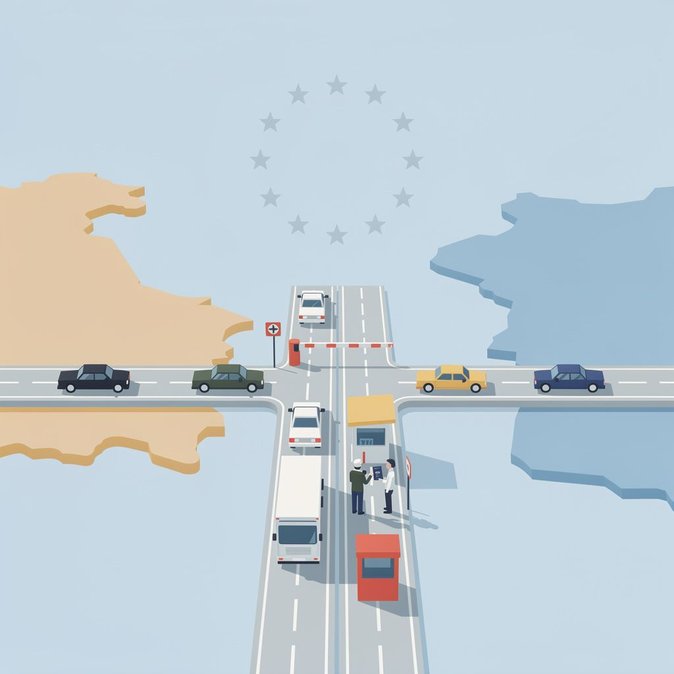
The European Commission on Saturday updated its public register of temporary internal border controls, confirming that Italy has notified an additional six-month extension of checks at its land border with Slovenia from 19 December 2026 through 18 June 2027. Rome cites “continued threat of terrorist infiltration along the Western Balkan route” and persistent migrant-smuggling networks as justification under Articles 25-28 of the Schengen Borders Code. Italy first reintroduced controls at the Fernetti and Rabuiese crossings in October 2023, progressively widening coverage to all vehicular and rail entry points between Trieste and Tarvisio. Each six-month renewal requires fresh proportionality assessments and notification to Brussels; Saturday’s posting is the seventh consecutive extension, drawing criticism from civil-society groups who argue that systematic checks breach the spirit of Schengen free movement. For cross-border workers and logistics operators the practical impact is moderate delays at peak times as police conduct document inspections. Although average waiting times remain under 15 minutes according to Friuli Venezia Giulia regional data, spot delays of up to an hour have been recorded on Monday mornings. Companies with just-in-time supply chains are advised to pad schedules or reroute via Austria where controls are lighter. From a compliance perspective, passengers should carry valid passports or national ID cards—even EU citizens—until at least mid-2027. The Commission is expected to revisit the broader issue of long-running internal controls in its Schengen governance package due next spring, but observers see little political appetite in Rome to drop the measure before that debate concludes.