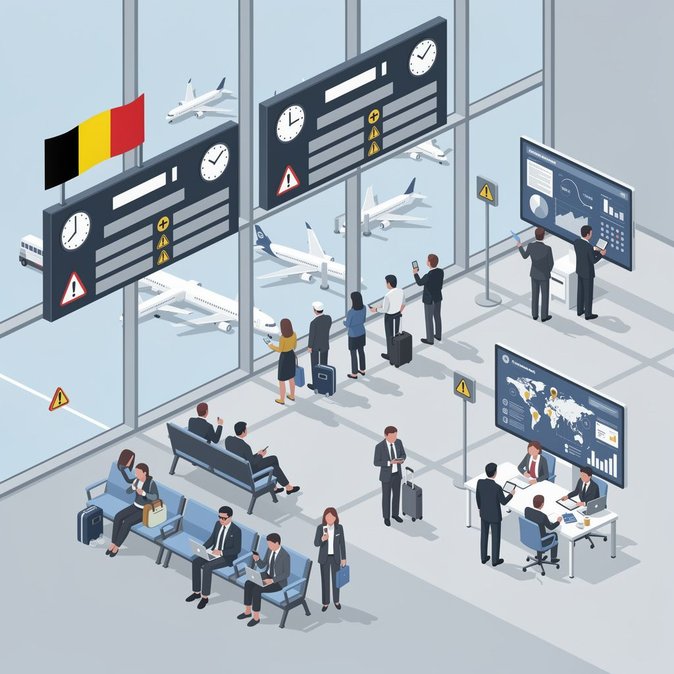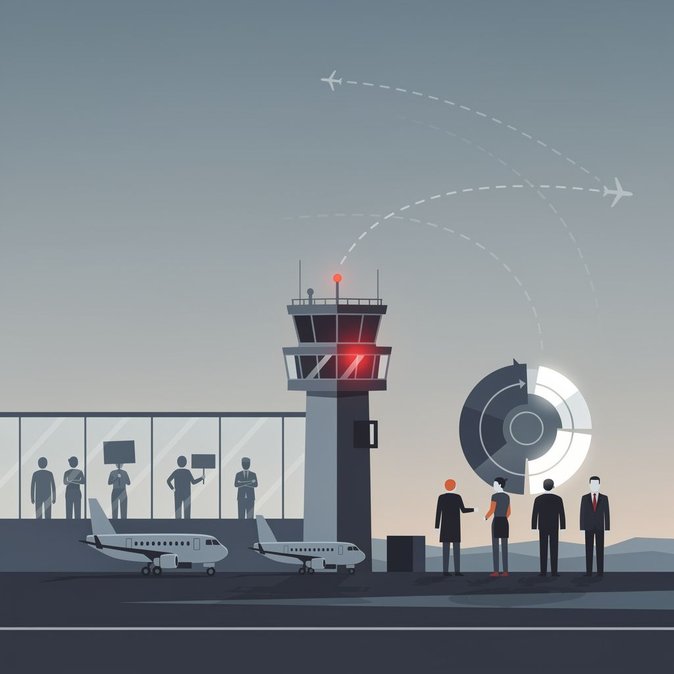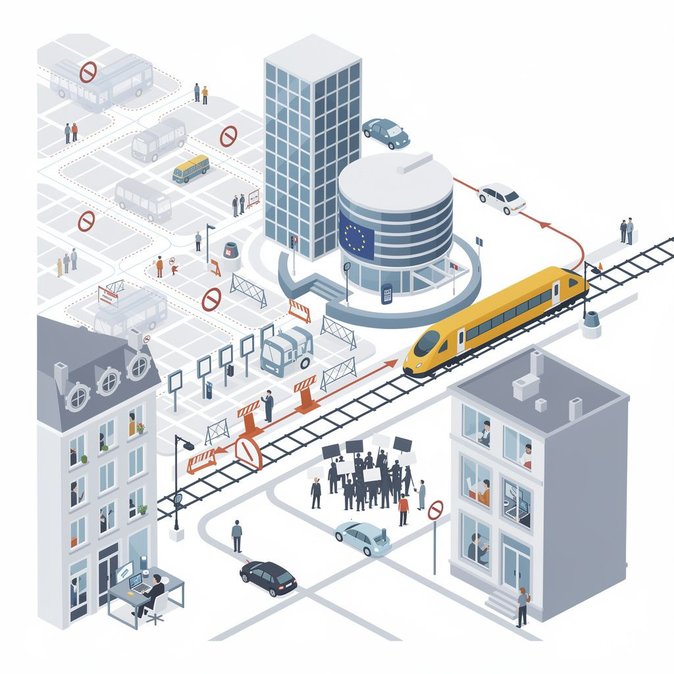
Hours before the latest shutdown of Belgian airspace, Federal Mobility Minister Jean-Luc Crucke revealed that his office has finalised a draft bill obliging Skeyes to maintain a skeleton air-traffic-control service during any future industrial action. The proposal, to be presented to the Council of Ministers on Friday, mirrors a 2017 rail-sector law that requires unions to file strike timetables 24 hours in advance and ensures at least one in three trains still runs. Under the draft aviation measure, controllers declaring a walk-out would have to notify Skeyes 48 hours beforehand, enabling the company to assemble a roster capable of handling a reduced volume of flights. The text also empowers the transport regulator to define what constitutes ‘essential traffic’ – likely emergency medical flights, state flights and a capped number of commercial movements per hour – and sets stiff penalties for non-compliance. Minister Crucke said the repeated closure of Belgium’s skies had become “untenable for the economy and for the image of our country”, citing estimates that each full-day shutdown costs airlines and the wider supply chain €15 million in direct losses. He stressed that the right to strike remains intact but must be balanced against the right of citizens and businesses to mobility. Trade-union federations ACV-CSC and ABVV-FGTB immediately condemned the plan as an attempt to “strip away effective strike leverage”. They argue that the rail template cannot simply be transplanted to the highly regulated world of air-traffic control, where even a limited number of controllers can handle only a fraction of normal traffic without raising safety concerns. Multinational employers welcomed the announcement. Deloitte’s global mobility lead for EMEA, Anne-Sophie Van Hove, told The Brussels Times that predictable continuity is crucial for expatriate assignments: “Our people plan client visits and relocations months in advance. The uncertainty around Belgian airspace is increasingly factored into location-choice discussions.” Parliament is expected to debate the bill in December, with the coalition holding just enough votes for passage if all parties stay united.
Source: The Brussels Times