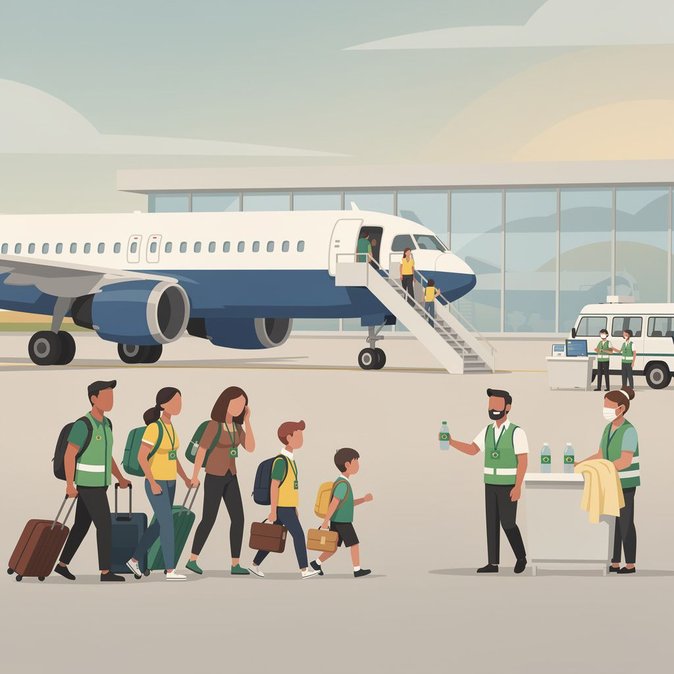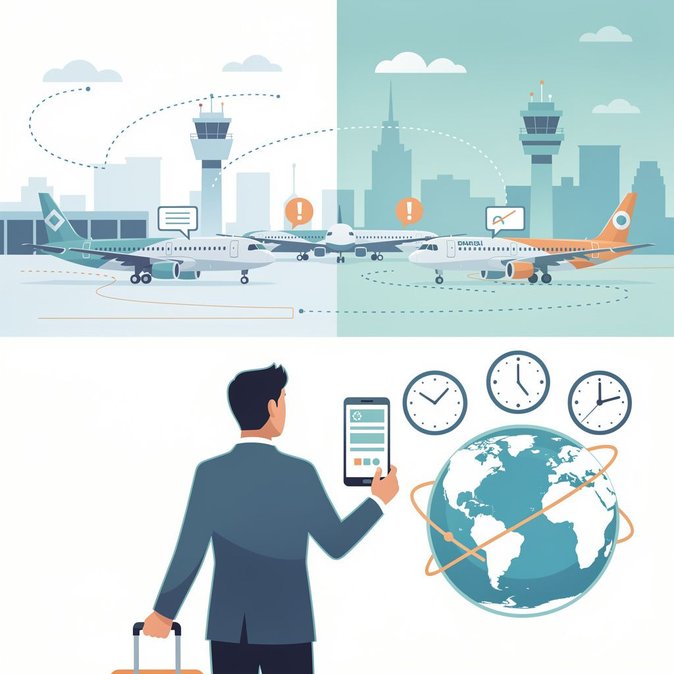
Just after the U.S. Federal Aviation Administration (FAA) ordered a rare nationwide ground stop on Saturday evening (21 November, Brasília time), Brazil’s National Civil Aviation Agency (ANAC) issued an alert urging passengers to contact airlines before heading to the airport. Although the FAA lifted the suspension four hours later, knock-on effects on aircraft positioning and crew hours triggered delays and cancellations on Sunday, 22 November. ANAC reminded carriers of their obligations under Resolution 400—Brazil’s passenger-rights rule that mandates timely information, material assistance and, for delays over four hours, the choice of re-accommodation, full refund or alternative transport. By 20:30 local time on Sunday, São Paulo-Guarulhos had logged one cancellation (New York) and one significant delay (Miami); Rio’s Galeão still showed four U.S. departures on schedule. Airlines nevertheless warned that Monday’s rotations could see further schedule trimming as equipment and crews reposition. For business travellers, the incident underlines the fragility of the long-haul corridor that links Brazil’s industrial heartland with U.S. corporate hubs. The United States accounts for roughly 35 % of Brazilian outbound corporate air spend; any disruption quickly cascades into missed connections onward to Asia and Europe. Mobility managers are therefore advised to build buffer nights into itineraries through the New Year peak and review service-level agreements to ensure duty-of-care notifications trigger automatically when the FAA issues nationwide directives. The episode also tests the first major holiday season since Brazil reinstated tourist-visa requirements for U.S. nationals. Consular officials confirmed to the press that the e-Visa portal remained operational despite the FAA outage, but stressed that travellers should print the visa confirmation to avoid check-in bottlenecks while system queries are cleared.
Source: Agência Brasil / OVALE