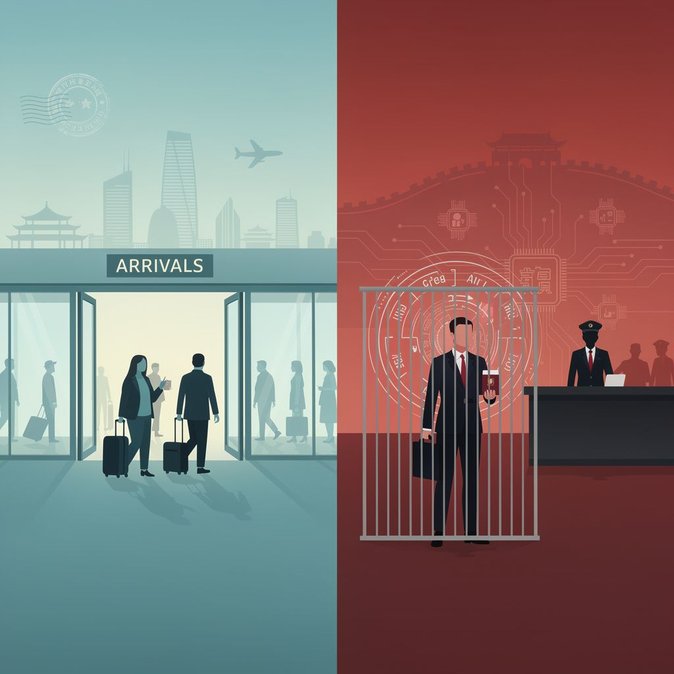
China’s long-anticipated Regulations on Exit-Entry Administration, which formally took effect in September, are now being enforced nationwide and travellers are beginning to feel the difference at the border. Under the new rules, immigration officers may demand detailed itineraries, supporting documents or even inspect mobile phones, and they can bar citizens from departing for up to three years if the trip is deemed to endanger national security or involve sensitive technology. Lawyers say the decree does not create entirely new powers but, by spelling them out in an executive order, it gives front-line officers a clearer legal basis to stop travellers and to retain passports held by state-sector staff and key private-sector executives. Paradoxically, the clamp-down on departures comes just as Beijing is reopening its doors. Since 2025 China has restored 15-day visa-free entry for Singaporeans, Malaysians and Thais, expanded 144-hour transit-visa waivers in eight cities, and from 1 November 2026 lengthened the stay permitted for APEC Business Travel Card holders from 60 to 90 days. At last week’s APEC leaders’ summit in Shenzhen, President Xi Jinping again promised to “facilitate travel for business, tourism and other purposes.” Business groups welcome the easier entry but worry that unpredictable exit controls can trap expatriate managers or Chinese staff critical to regional projects. U.S. and European chambers are advising companies to audit which employees hold dual nationality, carry trade-secret files on laptops or manage export-controlled software, because any of those factors could trigger additional questioning. Some firms now keep two sets of passports in secure offices and require executives to clear travel plans with headquarters at least two weeks in advance. For ordinary Chinese travellers the new climate translates into longer outbound queues and more document checks, especially on routes to Southeast Asia and Japan, destinations Beijing currently labels “high-risk” for telecom fraud or geopolitical tension. Travel forums are filling with first-hand accounts of phones briefly confiscated for message checks and of travellers asked to sign letters promising not to visit casinos abroad. Practically, mobility managers should build extra buffer time into connecting flights, warn travellers to carry proof of employment and return tickets, and avoid hand-carrying proprietary code or chip specifications. Inbound travel to China may be easier than at any time since 2019, but getting key talent back out now requires a new level of planning and compliance discipline.
Source: The Washington Post