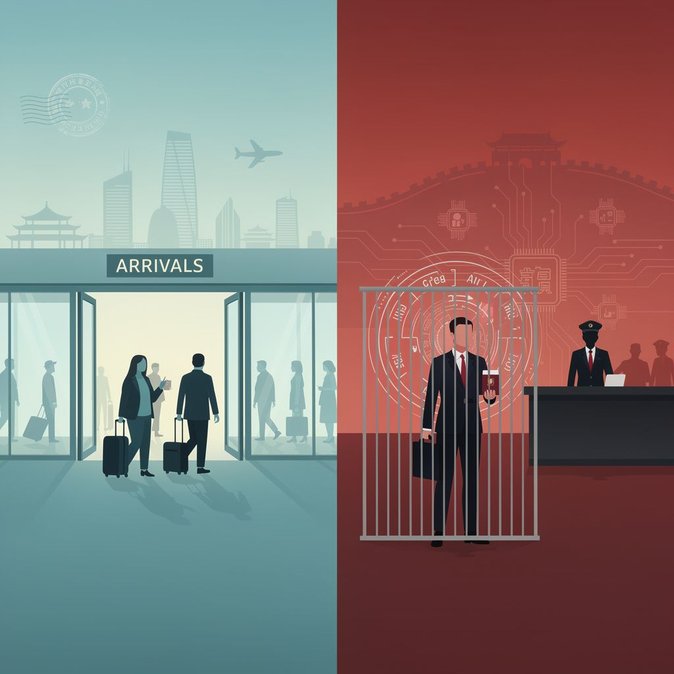
China’s latest push to lure back foreign visitors is colliding with a parallel – and far less advertised – tightening of rules that can prevent people from leaving the country. In a lengthy report published on 22 November 2026, the Washington Post details how Beijing’s publicity about streamlined tourist- and business-visa procedures coincides with a growing use of “exit bans” against both Chinese citizens and foreigners. According to lawyers quoted in the article, the number of clients seeking help after being barred from departure has jumped since September, when the new State Council Regulation on Exit-Entry Administration formally took effect. The regulation codifies the power of a dozen agencies – including tax, customs and market-regulation bodies – to request an exit ban for reasons ranging from unresolved commercial disputes to national-security concerns. While Beijing promotes its 30-day visa-free waivers for 48 countries and fingerprint-exemption measures at consulates, travellers are now advised to verify whether any civil litigation, unpaid taxes, or even an employer’s administrative investigation could trigger a border hold. Foreign chambers of commerce say several expatriate managers have been detained at airports this month pending settlement of contract disputes, forcing multinationals to review mobility policies, secondment contracts and dispute-resolution clauses. Practically, companies should audit outstanding tax filings for China-based staff, add exit-ban checks to pre-departure workflows and ensure that visiting executives carry proof of their itinerary’s business purpose. They should also brief employees on newly expanded police authority to question travellers within 300 metres of all ports of exit. Failure to prepare could mean missed meetings – or far worse – for travellers who assumed that an approved visa guaranteed the right to leave China as easily as it allowed them to enter.
Source: The Washington Post